Christmas in Bali

Note: This post was originally written Dec 26, but I didn’t get around to formatting and adding pictures until Jan 1.

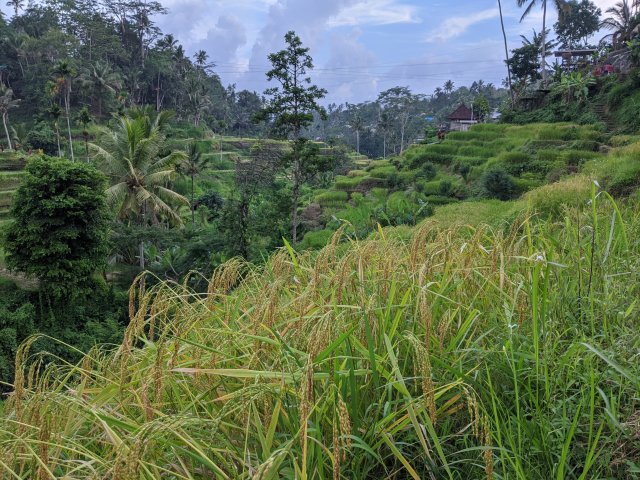
For the past 7 days, I have been exploring the beautiful island of Bali. Located just east of Java in the long Indonesian archipelago Bali is famous for perfect weather, white sand beaches, incredible surfing and scuba diving, rolling hills covered in splendid rice terraces, and a strong local arts scene. Almost exactly the same size as King County, Bali is also famous for tourism, hosting about 6 million tourists per year.

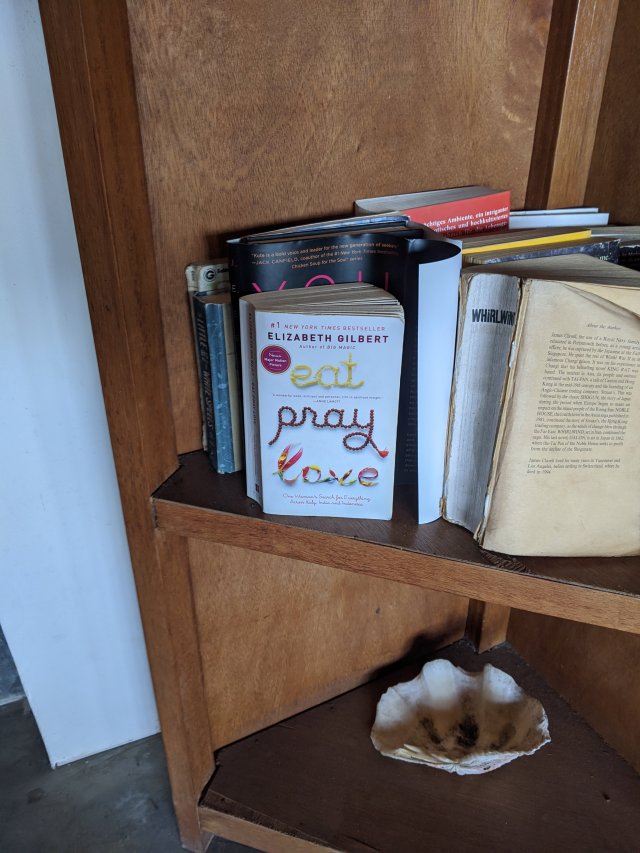
Spotted on the guesthouse’s bookshelf.

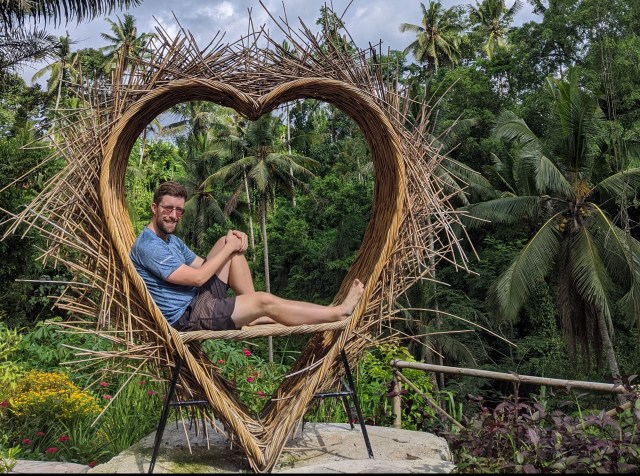
Not interested in the parties of Kuta, I immediately headed for the town of Ubud, two hours north of the airport and urban center at the southern tip of the island. Once a quiet village surrounded by nothing but rice terraces, Ubud is now a bustling town full of yoga studios, vegan restaurants and tiny little shops selling artsy junk to tourists. It’s quite pretty, and I could see how people can fall in love with the place. It’s also home to an incredible, never-ending traffic jam, the result of too many tourists and businesses trying to cram into a road network designed for a tiny farming village. Fortunately the town itself is very walkable.

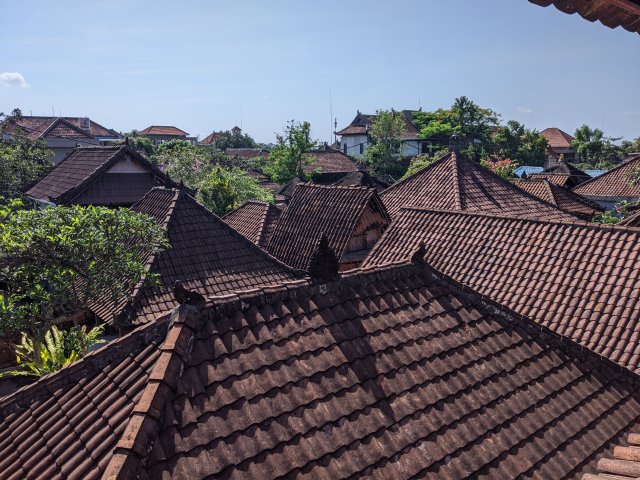
Looking out over the rooftops of Ubud.

Part of my goal with Bali was to get some final relaxation in, soaking up the sun and the chill vibes for a few last precious days before heading back to the Big Dark. I attended yoga classes and got massages in the day, sipped a couple fancy cocktails and read my book each night before turning in early, and generally ate like a king. While not as cheap as, say, Vietnam, Bali is still quite affordable, and I generally had a delightful time.

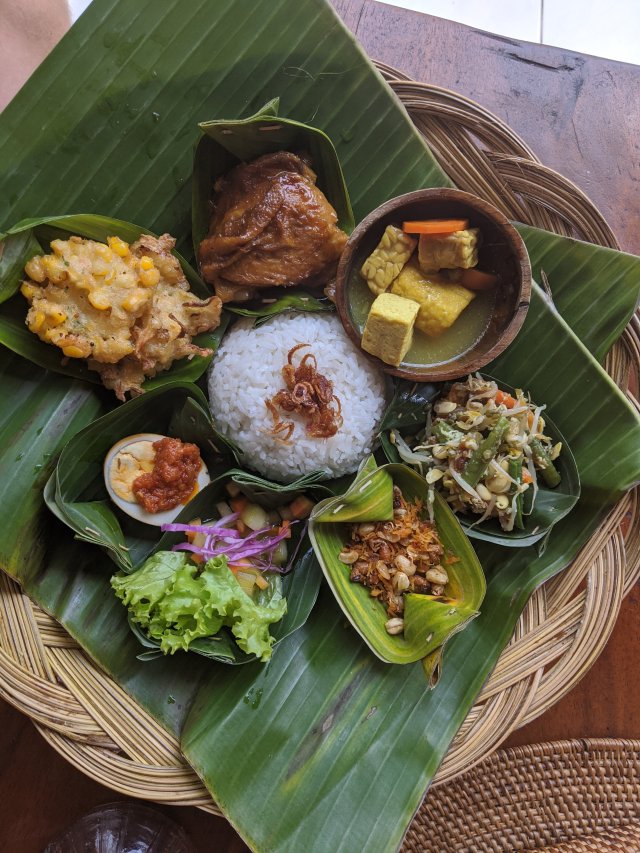
Nasi campur, the iconic Indonesian dish.
Don’t worry it’s a paper straw.
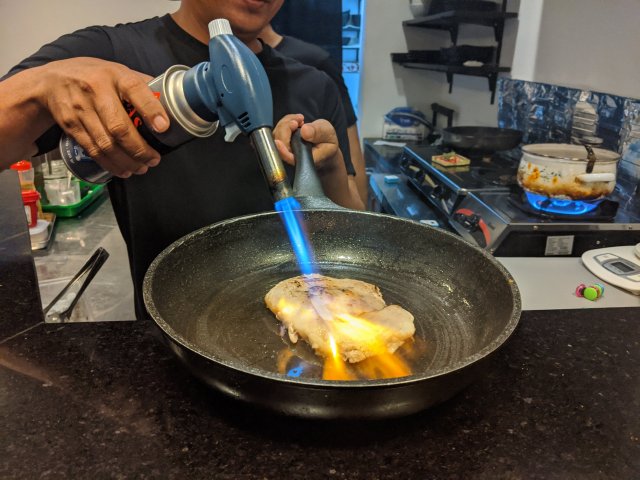
Truly delightful ramen is a performance art.

But I wasn’t just a slug – I also did activities. I found a Discover Scuba Diving course on the Northeast coast, where a dive master teaches you the basics, then stays close by your side on a shallow dive to bail you out if you get into trouble. We visited the wreck of the USS Liberty, a cargo ship that was torpedoed by the Japanese in WWII, towed to the beach, then pushed out to sea by a lava flow in the 60s.

It was so cool! Getting used to the equipment was tricky – you really have to fight down the reflex to panic, and maintaining buoyancy is hard. But I got the hang of it pretty quick and started to really enjoy myself. There was coral and so many fish, and swimming through the wreck of the ship was amazing. I think that traveling somewhere tropical to get fully certified may be a future vacation.

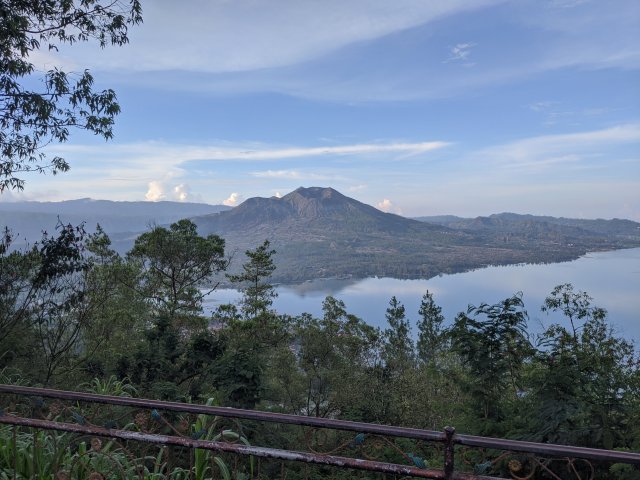
For obvious reasons I did not take any photos diving, but we stopped at a nice viewpoint on the drive back.

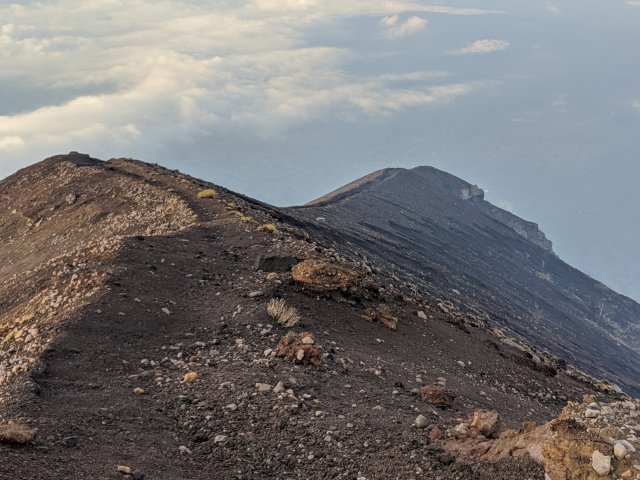
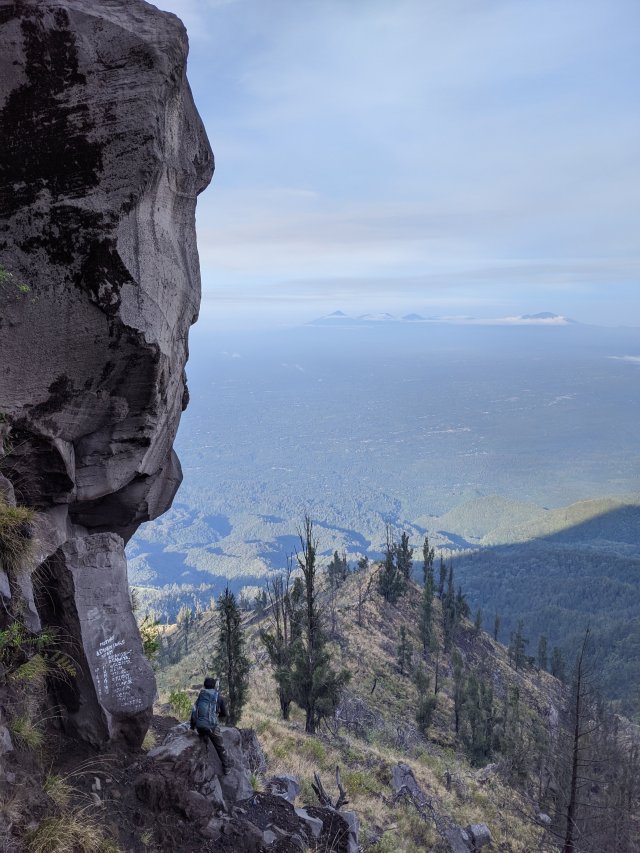
I also climbed Mt. Agung, the highest mountain on Bali. It’ll be a while before I can get my next mountain hike in, so I couldn’t pass up the opportunity for just one more summit. I hired a guide and we began at midnight for a dawn summit, which we nailed. At just 3000 meters Agung is not nearly as tall as Kinabalu, but it’s isolated enough that it felt like the top of the world.

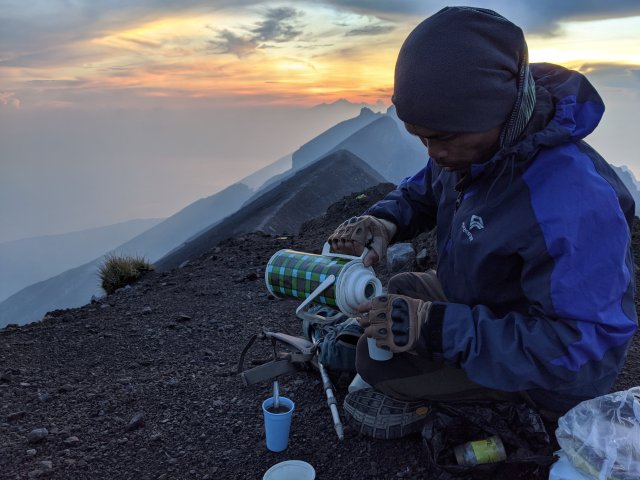
The guide had a timelapse camera that we played around with while waiting for the final ascent.

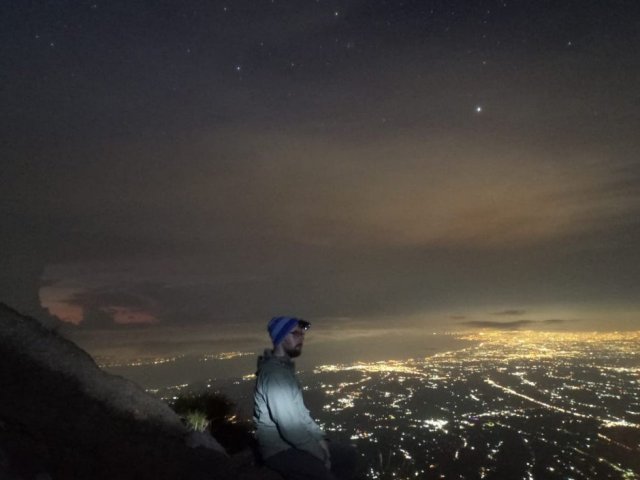
The ascent was long and steep but incredibly cool. Though it was clear above us, a thunderstorm was raging out over the ocean, lighting up the distant clouds again and again, silent but for a low rumble almost unrelated to the light. It made me think of something Murakami wrote – “A weather front was stalled out in the Pacific–like a lonely person, lost in thought, oblivious of time.”

The master at work.
The mountain’s shadow.
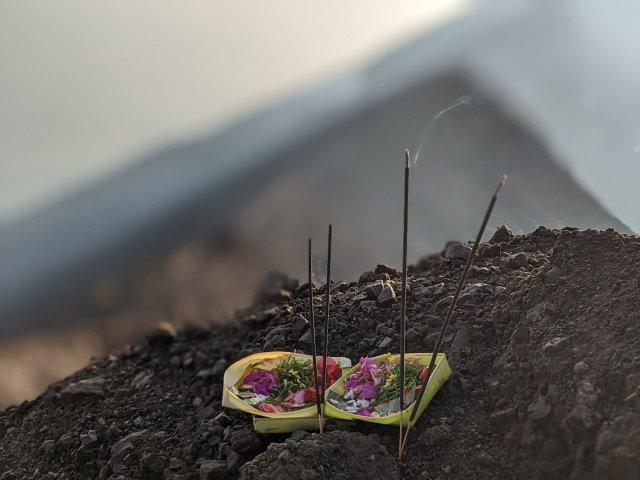
An offering to the mountain spirit.
The trail back down.
Bali’s mountains rival the Cascades for beauty.

On Christmas I hung out with a couple of women traveling together from Colorado who I met at the guesthouse. We hired a car and driver and went on a tour of various waterfalls and temples. Our original plan was to rent motorbikes, but the driver was so cheap and the Ubud traffic so ridiculous that we decided to spring for it. It made for a wonderfully relaxed day of sightseeing.

img_20191225_1515244602027953784916925-e1577944135596.jpg

In the evening we met up with some other guests and had a wonderful Christmas dinner together, then polished off a (small) bottle of surprisingly good Indonesian brandy back at the guesthouse. It was all I could ask of a Christmas away from home.

Bali is a weird place. It’s expensive (for the region), touristy and a bit pretentious. It’s also genuinely beautiful, and Ubud at least manages to retain that easy island feeling. I can’t say I fell in love with the place, but I enjoyed my last week in Asia.

And now I’m headed home. As I write this I sit in the Bali airport, awaiting a plane to Taipei and then another back to Seattle. The feeling is bittersweet. I have had a tremendous time traveling for the past three months but I’m also ready to sleep in my own bed, see all my people and be done living out of a 40-liter pack. I’m ready to have a computer again, and a kitchen. I’m even ready for winter, to not start sweating every time I walk outside, to have Jack Frost nip at my nose a little bit. To settle down for a while, to be used to where I am and not constantly have to make new friends.

Look out Seattle! I’m coming home!

Concrete Advice for Prospective Backpackers

I can’t believe my trip is almost over! I’ve been traveling for three months now, and I have learned a lot in the process. My goal with this post is to distill that experience into specific, useful advice, to help empower you all to go have an adventure of your own. Maybe I’ll even come meet you.

Planning

This is the number one thing I feel I’ve learned on this trip, so I’m going to put it first. Plan less, and plan in a way that is flexible.

I’m a planner by nature – I love the puzzle of doing research, figuring out how many days I need in this or that city, finding the most efficient route through a country, and sorting through all the permutations of planes, trains and automobiles. My instinct is to get everything lined up perfectly, just for the satisfaction of a job well done. Plus it’s exciting to research and daydream about a trip! The problem is, this approach leaves out two of the richest sources of information about a place: other travelers and your own experience.

Other travelers have up-to-the-minute information about what’s going on. Maybe something was unexpectedly incredible (Da Lat easy rider tour, audioguides for the genocide museums in Phnom Penh), or is unexpectedly closed (Railroad Street in Hanoi). Maybe some attraction was discovered by travel blogs 3 years ago, and now it’s overrun with tourists and they’ve quadrupled the price (Vietnam’s Golden Hands Bridge). Maybe they just had a great experience in some town that nobody’s heard of (Ko Ta Kiev). Maybe there’s a group forming to go do something interesting right now, and they invite you to join (Pai Canyon).

More important than any facts or stories about a place is the way you personally respond to it. Allowing your travel plans to adapt to what your heart tells you is essential for an enjoyable extended trip. Maybe you fall in love with a city and decide to extend your stay (Hoi An). Maybe you discover you love an activity way more than you expected, and you just have to do more (motorcycling through Vietnam). Either way, having too rigid of a schedule will leave you disappointed, stressed out or both as you try and fail to accommodate new things you’ve discovered.

The trick then is to plan enough in advance to put you at ease and to get excited, while leaving enough space to be flexible. Here are my concrete tips for traveling flexibly:

Before the trip

  • 6 months to a year in advance: secure time off. Step up your saving. Daydream, and maybe do a little research. Pester your friends about joining you for a chunk of your trip.
  • 2-ish months in advance: Research and book the coarse-grained details of your trip. This includes long international flights (better prices) and big anchor activities like the REI tour (likely to sell out). Make a list of countries you’d like to visit and check the visa requirements (Vietnam’s took forever). Figure out a rough budget. If friends are joining you, figure out where you’ll meet and make a rough plan of what you’ll do. Read travel blogs, take notes if that’s your thing, but don’t book anything yet. Maybe book a couple days in a hostel on either end of a big flight, but no more than that.

During the trip

  • Make sure you have a plan for getting internet on the go. Connectivity is key for a flexible, seat-of-the-pants travel style. 4G coverage is better in Southeast Asia than it is in the States, but only if you’re equipped for it. T-mobile has international coverage baked into the plan, or you can buy a sim card or mobile hotspot at most airports.
  • Book short flights no more than a week in advance, and ground transportation 2 days in advance. This is usually plenty of time to avoid sold out tickets, though there are exceptions. Holidays can wreak havoc here, and some routes (like the night train from Bangkok to Chiang Mai) consistently sell out early. Asking around at the hostel is your best bet for avoiding this.
  • Only book two days at a hostel at a time, and don’t book more than a few days in advance. You can always extend your stay if you want more time. I never once had trouble with hostels being sold out.
  • Book activities and tours through your hostel. They can usually book things the night before, and sometimes you’ll get a discount. Ask around in the common room to find out which ones are worth doing, and maybe to rustle up a posse to go with you.
  • Keep track of useful resources: booking websites, blogs, even questions to ask other Backpackers. Having a list will make it easier next time.

You learn much more about a place by going there than you ever will by reading a travel blog or book, and no travel blog can tell you how you will respond to a place. Leave enough space in your plan to be flexible and follow leads and you will have a happier, more relaxing trip.

Choosing Hostels

You may have noticed that the hostel came up several times in the previous section. That’s because your hostel is important! You’ll spend somewhere between 30-60% of your trip in the hostel, so hostel selection has an outsized impact on how much fun you have somewhere. While a good hostel will keep you well rested, well fed and in good company, a bad one will leave you cranky and lonely. But how to find the good ones?

First, know your hostel categories

  • Party hostels are exactly what they sound like. The crowd tends to be young and drunk, and scheduling an early morning activity is a bold move. Party hostels can be fun and they’re usually very cheap, but they tend to be less comfortable and clean. The stoner hostel is a subtype of the party hostel adapted for remote, beautiful locations like islands and jungles. A key nugget of wisdom is that you can party at a party hostel without staying there – just turn up at happy hour and start mingling.
  • Institutions are big, established, and efficient. Commonly found in big cities, they’re typified by huge dorms full of purpose-built sleeping capsules, solid dark materials, and soft ambient lighting. Though always clean and comfortable they can be a little soulless, and often lack the sorts of comfortable, intimate common areas that foster new friendships. Best chosen when you already have your plans in town figured out, or when in a city expensive enough that independent hostels can’t compete.
  • Independents are all the rest. These are the mom and pop shops, the comfortable-yet-personable, the artsy, the niche. These are the places where the staff mingles with the guests, and everybody knows each other’s names. Maybe the hosts live on site, and their young children are constantly underfoot. Maybe half the staff are other backpackers, “volunteering” for a week or a month in exchange for room and board. Maybe there’s a campfire every evening, or the owner mans the rooftop bar from 10 to midnight and will share a joint with anyone who asks. The furniture in the common room is mismatched and well-loved, the dorms are 2 or 3 bunk beds crammed into a tiny room, and you have to turn on the water heater 10 minutes before you shower. As you can probably tell, there is a special place in my heart for these scrappy little independent hostels, and they are my first choice whenever possible. In my opinion they are the best at doing what a hostel is supposed to do: giving travelers a temporary place to call home.

I look for hostels using the booking.com app. It’s a solid piece of software, and I’ve been quite happy with the results – enough that I’ve switched over from hostelworld. Their review system asks a series of questions and then aggregates the answers into a rating, which I think is more useful than just asking for stars, so I usually pay attention to the number as a good starting point. Here’s what I look for when I investigate a candidate.

  • Your three basics are clean, comfortable and secure. If any of those is missing, I’m out. Reviews are a great way to assess this.
  • Common rooms are key. The common room is where you meet fellow travelers, strike up conversations, pick up leads and make friends. I usually use the hostel’s photographs to assess this. What you’re looking for is a cozy, well-lit space with communal tables and cheap alcohol. This forces people together, making that initial breaking of the ice easier. Avoid hostels where the common room is a full bar serving customers other than guests, this makes casual conversation much harder.
  • Many of the best hostels will do a social happy hour – free beer 6:30-7 or something similar. This is a great way to get everyone together at the same time and facilitate conversation.
  • Free breakfast is nice, and can also be a good opportunity to meet people.

Take hostel recommendations from other travelers with a grain of salt – their needs, preferences and budget may be very different than yours. Always do your research.

Many hostels have private rooms in addition to the dorms. These are a cost-effective way to get a little privacy for a few days while retaining access to the common room. This can be an excellent place to recover from a bad hostel experience, or to get over a stomach bug or the flu.

Hostel prices will vary wildly from country to country and even city to city. In Tokyo a typical hostel was $30/night, in Seoul $25, Singapore $20, Bangkok $12, small town Thailand $8, and Vietnam $6 (dang Vietnam was cheap). Within any city you’re likely to see a range of prices, with institutions the most expensive, independents in the middle, and party hostels the cheapest.

Budget

Money sucks. It’s the root of all evil, right? But it’s also important not to run out of, especially if you’re thinking about not working for a few months and need to get back home at the end of it. So make a cup of coffee, get out your favorite spreadsheet program, and make sure everything lines up.

In the interest of prior art, here is my budget for this trip. 3 months is about 100 days, which both makes the math easy and gives me some buffer.

  • Roundtrip airfare between Seattle and Asia: $2000
  • Transportation within Asia: $1500
  • Lodging: $15/day, $1500 total
  • Food + booze: $30/day, $3000 total
  • Activities: $140/week, $2000 total

Since I’m way too lazy to itemize my transactions, these are approximate highball figures amortized over the whole trip. Note that this doesn’t cover expenses back home like rent, car payments, insurance, alimony, etc.

Not counting the REI tour (which hardly counts as backpacking), that works out to about $10k for 3 months. Not cheap, but not ridiculous. I also haven’t been pinching pennies – I’ll take a $125 flight over a $25 bus if it saves me 6 hours, I don’t shy away from expensive activities like canyoning or mountaineering, and I will always be willing to splurge on food (especially food tours). A serious budget traveler could probably shave another couple thousand off that number.

Travel Light

I would consider this good general life advice, but it’s especially important while backpacking. You will be carrying your entire life on your back. Make sure it fits.

Now, I’m not saying you’ll be carrying your full kit around with you all the time. I love hiking and even I have only had a few times where I yomped my loaded bag for more than a kilometer or two. But you’ll certainly carry it around airports, bus terminals and down the block when your cab drops you in the wrong place. Keep it easy to lift and you’ll thank yourself later.

I highly recommend a backpack over a roller bag. Broken sidewalks, escalators, and stepping up onto a bus are all difficult with a roller bag, but with a backpack you won’t think twice about it. I’m also a fan of using a bag that you can carry onto an airplane, because checked bags are expensive, slow and prone to getting lost. It’s so satisfying to step off the plane and saunter right past the crowds waiting at the baggage carousel.

Fully loaded without water, my 40 liter pack weighs about 10 kg (depending on how many snacks I’m carrying). This is a weight that’s comfortable to carry for a long time, and it’s also the cut off for carry-on luggage for many airlines.

So how do you get your weight down?

  • Plan on doing laundry frequently. Laundry is easy to do out here – you just hand it to the hostel owner and pay $1-2 per kg, and it comes back crisply folded the next day. I typically do a load once a week.
  • Find garments that can fill multiple roles. My pants are fancy synthetic quick-dry hiking pants, perfect for climbing a mountain or exploring a city, but they’re also darkly colored and fashionably cut enough that they sit comfortably under a button down shirt. My shorts double as swim trunks. My shoes are… well, you get the idea. Each of those covers for two or three garments, reducing the number I need to pack.
  • Use layers to your advantage. The obvious place for this is clothing – a lightweight wool shirt and a fleece sweater can together do the work of a big puffy jacket, especially if they team up with a rain shell to cut the wind. But it applies to the luggage itself as well. I have a small soft backpack that fits easily inside my big bag; in the airport I combine them for easy carrying, but on the plane they come apart and the big bag sits in the overhead bin. Finding clever ways to mix and match your gear is almost part of the fun.
  • Don’t be afraid to reuse things between washes. In a pinch, a quick rinse in the sink will work wonders. Besides, a certain level of grubbiness is expected of a backpacker!

Get Out of the City

I love cities. Seoul and Singapore were two of my favorite stops on this trip, and they can make excellent hubs for exploring an area. Cities are big and exciting, they have delicious cuisine and world-class entertainment, and they remind you that the world is getting smaller every day. Plus they’re usually way cheaper to fly into and out of.

But if cities remind us that the world is getting smaller, the countryside reminds us that it is still quite large. For a traveler, if you want to really see a place, to see sights and sounds and a way of life that is different than where you came from, it is essential to get out of the big cities. Small towns are where you get the best nature of course, but you’re also more likely to have an interesting cultural experience if you’re in a place where the locals are a little less multicultural. Find some interesting small town like Pai or Da Lat, then take trips out into the countryside.

Or even better, book a few nights at a homestay in some truly remote village. If you do a multi-day trek a village homestay is often included. If that’s not quite your jam I’ve heard that Facebook is the best way to find one on your own. It’s hard to find a more eye-opening experience than knocking back a glass of truly vile rice wine with a local and reminiscing about 5 years ago when the village didn’t have electricity yet.

Getting out of the city is a little more work, to be sure. Finding the right balance of planning in advance and winging it can be tricky. But in my opinion it’s totally worth it.

Ease Into It

Backpacking for an extended period is inconvenient. It’s logistically difficult. It’s a little scary. There’s a thousand good reasons not to, finances and career and pets and aging parents and a partner who’s not really interested in travel. And, not everyone likes extended travel. It would be frustrating to do all the work of putting your life on hold just to have a bad time once you’re there, especially if you can’t afford to come home early or have invested a big chunk of ego in the trip.

The thing is, backpacking doesn’t have to be an all or nothing experience. You can ease into it, try out portions and find what works for you.

Maybe you book two or three nights in a hostel as part of a larger vacation. Don’t plan those days too carefully, just show up in the common room and see what happens. Or maybe the next time you travel, challenge yourself to bring as small a bag as possible. You’d be surprised what you can get away without.

The next step is to backpack short-term. Yes, this is ok, and it’s still backpacking! Just because it’s not an epic months-long voyage doesn’t make it any less legit. 10 days or 2 weeks is small enough that if it doesn’t go well its not a big deal, and it’s much easier to put your life on hold for that amount of time. A short trip will build confidence, allowing you to get used to this different way of traveling and to start to see its benefits.

Then if you find you enjoy it and want to see more, you can start working on a bigger trip, confident that you know what you’re getting into.

And if you don’t find that lifestyle piquing your interest? That’s fine too. Traveling is a specific, expensive, time-consuming hobby, and if it doesn’t fit your lifestyle or its just not interesting to you, why force it?

Besides, someone has to stay home and read the travel blogs.

Singapore

I visited Singapore immediately after Brunei, and though the two have many obvious differences, I think the comparison is worth making. Both are tiny nations in Southeast Asia, each sharing a border with only Malaysia and the sea. Both are extremely wealthy and well-developed (the UN human development index lists Singapore and Brunei as first and second in the region). Both found the origin of their wealth in a unique geographical feature: Brunei its rich oil deposits, and Singapore its deep harbors and strategic position on the trade route between East Asia and South Asia / the Middle East. Both have strict, almost authoritarian governments, tolerated due to a cultural preference for collective harmony over individual liberties.

But that’s where the similarities end. Though they’re both physically tiny, Singapore’s 5.6 million residents outnumber Brunei’s 10-to-1. Where Brunei has a hereditary sultanate, Singapore has an elite planning committee full of the island nation’s best and brightest. Where Brunei is an Islamic theocracy, Singapore holds ethnic and religious diversity as one of its greatest strengths. And while oil and gas still account for 90% of Brunei’s GDP, modern Singapore boasts a remarkably broad economy including shipping, finance, oil refining, manufacturing and tech.

Ok enough economics, let’s talk impressions.

Singapore is awesome.

It’s sparkling clean. The streets are spotless, the sidewalks well-maintained, I don’t think I saw a single building that needed work. This is the only city in Southeast Asia where you can drink the water out of the tap.

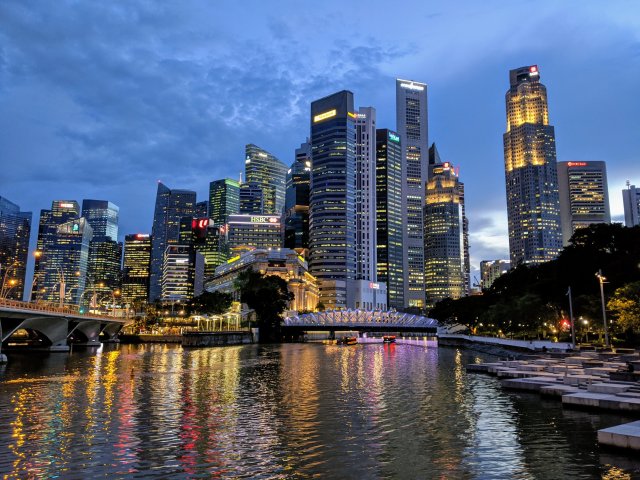
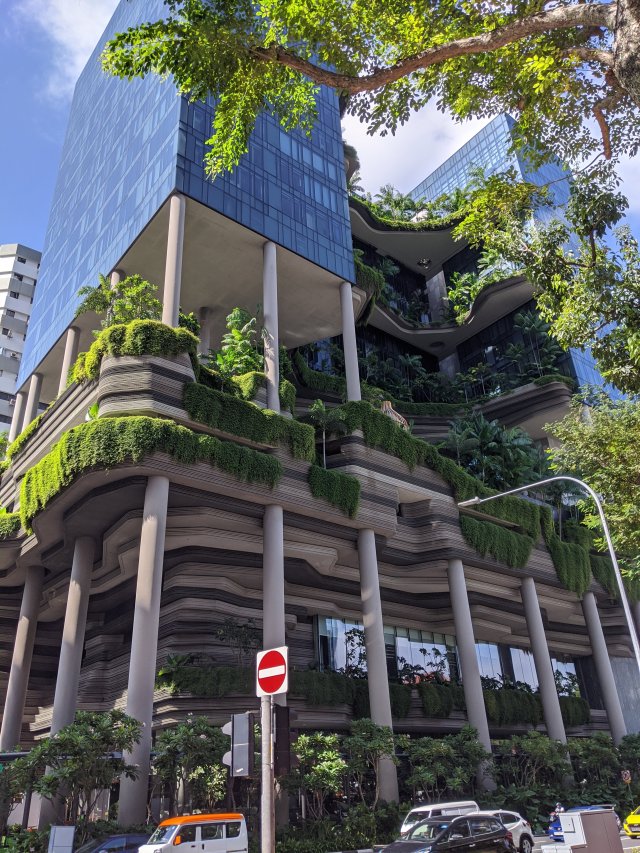
The architecture is inspiring. They call it a “city in a garden”, and there’s greenery everywhere. The different neighborhoods are interesting and distinctive, each bringing something unique to the city.

Look at all that green!
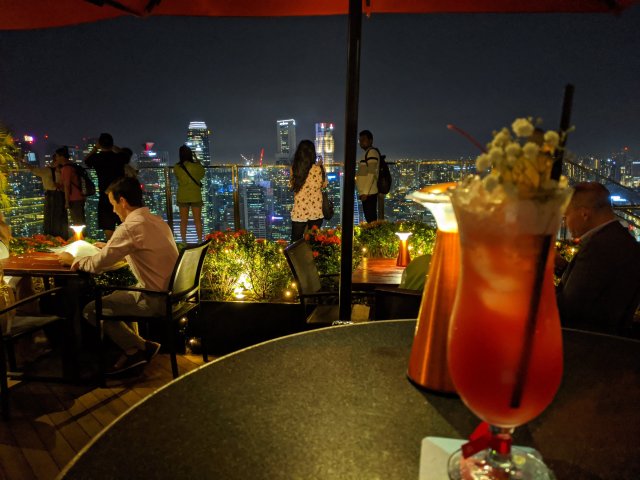
The view from the top of the Marina Bay Sands on Singapore’s waterfront. The Sands is appropriately named – it lies entirely on reclaimed land, most of which is sand barged in from neighboring countries. In total Singapore has increased its size by a whopping 23% since independence. Don’t ask me how much this cocktail cost.

Singapore is also possibly the best planned and best funded place I have ever been. The city revolves around its residents, organizing them, empowering them, and keeping them safe. Every detail of the built environment seems carefully considered, deliberately chosen to serve a need in harmony with its neighbors. This is a city that’s not afraid to dream big, and clearly doesn’t have qualms about paying taxes. They also know how to do maintenance, keeping the infrastructure in good shape long after its initial construction.

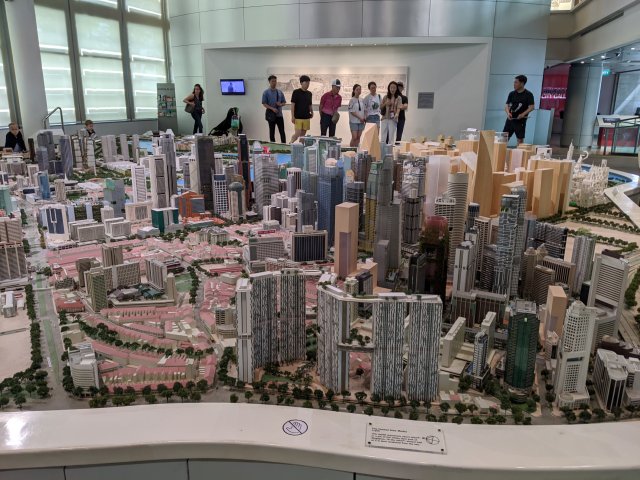
The city gallery is a museum of the tools and techniques the Urban Redevelopment Authority uses to plan the city. For a nerd like me, who reads about economics for fun and has sunk countless hours into Cities Skylines, visiting was like a pig visiting mud.

And the food – oh, the food! Hawker centers full of incredible bites. Coffee shops, patisseries, the best egg tarts and curry puffs I’ve ever had. Restaurants for any budget, cheap local bars and exclusive cocktail lounges with no menus. You could do nothing but eat here for a month and never get bored.

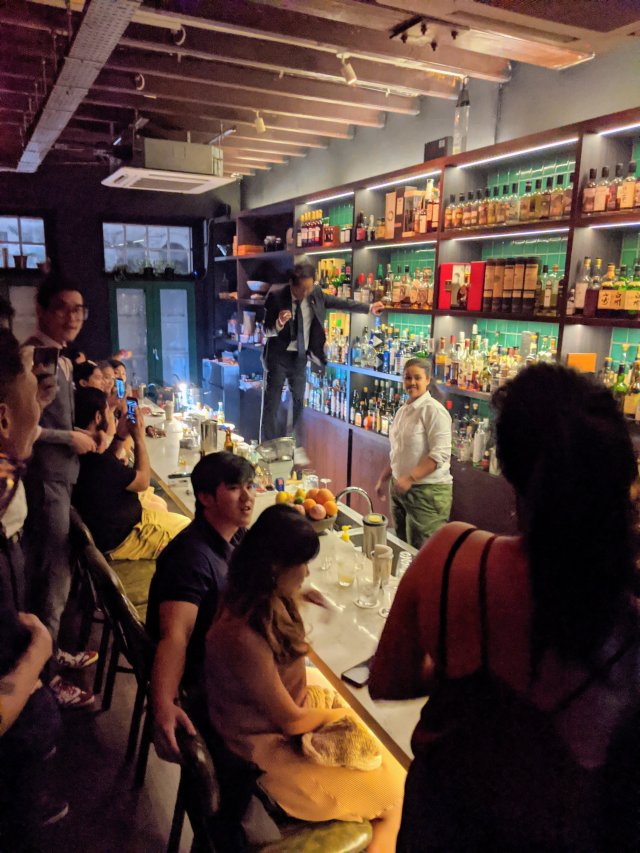
Why yes, that is the manager of this fancy cocktail bar standing on the bar to make a toast.

It’s not without its problems, of course. Singapore is quite expensive, on par with other top tier cities like New York and London. This is especially apparent when compared to other places in the region – you could probably get a whole keg of Saigon beer for the price of a single Singapore Sling. The government has absolutely no tolerance for rule breakers (caning is still a thing), and Singapore has the biggest prison in Southeast Asia. The role and rights of immigrant laborers is another point of contention, and I’m sure a local could point out a dozen other issues that I missed entirely.

Yet the Singapore model clearly works. The city is beautiful, functional and clean. Its citizens are wealthy, healthy and happy. Its companies are powerful, and it’s economy is robust and steadily growing. From the outside, it seems the kind of place where if you work hard and follow the rules you’ll be well taken care of. It makes sense to me that the ruling party has won 60-70% of the votes in every election since they became independent in 1965 – what they’re doing works, and Singaporeans clearly agree.

Visiting Singapore is like visiting Star Trek’s vision of future earth for a few days.

I could totally see spending a few months here as a digital nomad, or even taking a job for a Singaporean firm and settling down. The city is absolutely a must-visit if you’re in the region.

Just make sure you budget for it.

The Nation of Brunei, The Abode of Peace

Brunei is a sultanate on the island of Borneo headed by an all-powerful and extremely popular king. Once the center of a Muslim empire that stretched across Borneo and much of the Philippines, through years of attrition and concessions to colonial powers Brunei has been winnowed down to its present tiny size. It became a British protectorate in the late 1800s, and was granted independence in 1984. Tiny and impoverished at independence, the discovery of rich offshore oil and natural gas deposits enabled rapid development, and now Brunei is one of the richest countries in the world per-capita.

At the recommendation of many other travelers I spent just over 24 hours in Brunei, and I would say that was the perfect amount of time. The capital has some nice parks and monuments, but there’s really not that much to do, and Sharia law means no nightlife. It felt kind of like hanging out in Kirkland – quiet, pretty, a good place to raise a family, but a little boring.

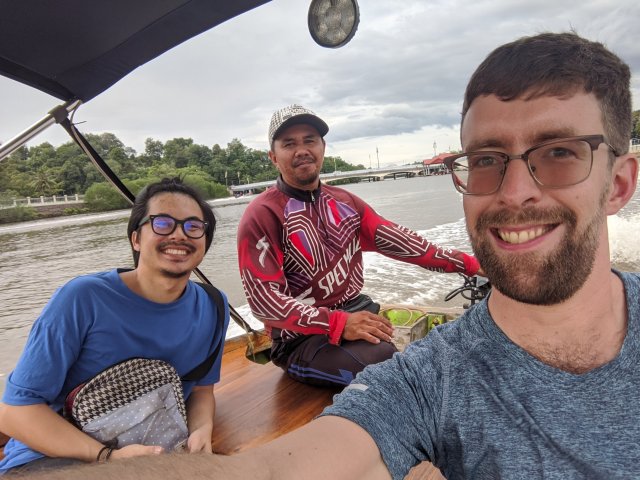
My time in Brunei was absolutely made by the host at my hostel, Ash. As it’s currently the off-season and Brunei doesn’t get many travelers in the first place I was the only guest, and Ash gave me the full experience, driving me around town the night I arrived and helping me come up with an itinerary for the next day. If you ever go to Brunei, stay at the Hostelite.

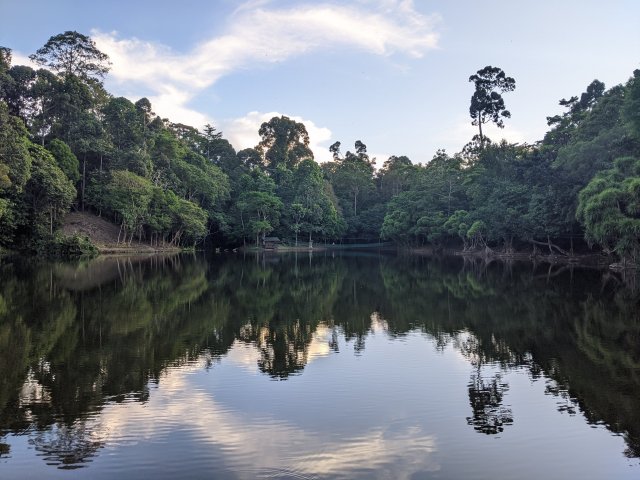
One of the best things to do in Brunei is to take a river boat ride. The Bruneians take a lot of pride in their nature, and have worked to keep the areas outside the city pristine.
That’s Ash on the left.
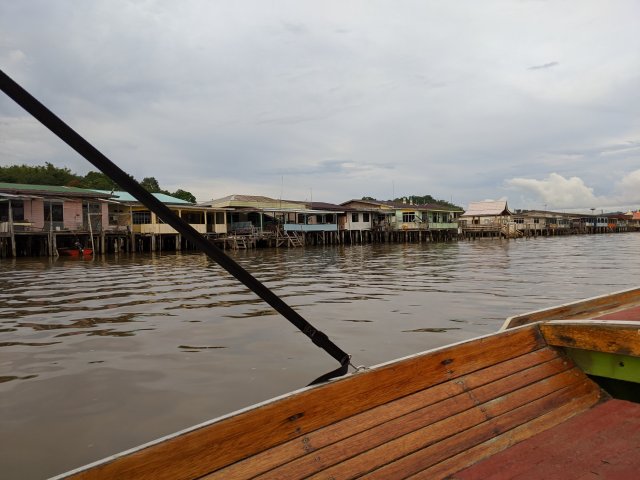
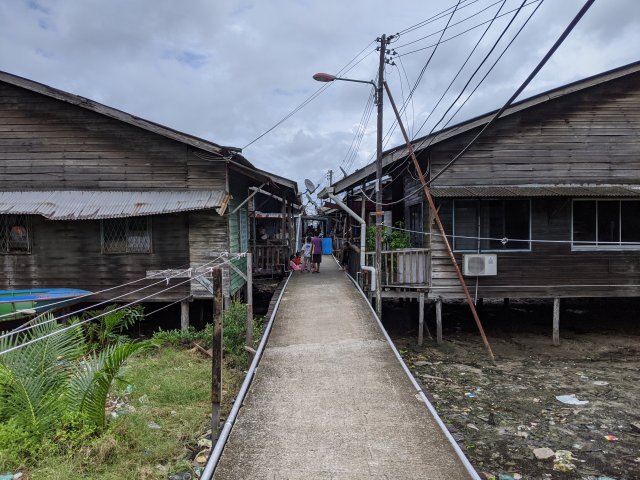
Like many places in SE Asia, Brunei has a historic floating village. But unlike the villages in Cambodia and Thailand where people live on the water in poverty out of necessity, in Brunei its a matter of tradition. Living on the water is a status symbol. And looking at some of the houses, you would be more accurate calling it a floating subdivision than a village.
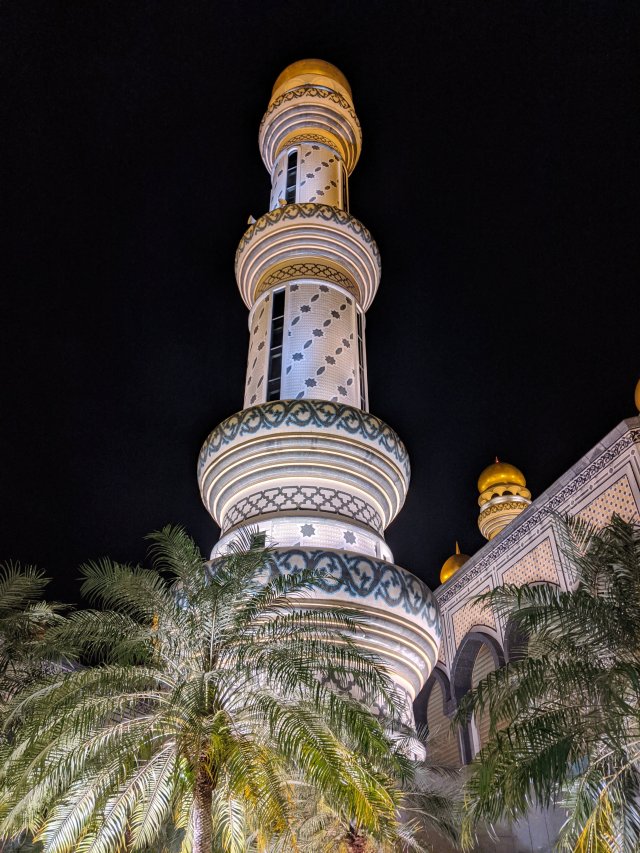
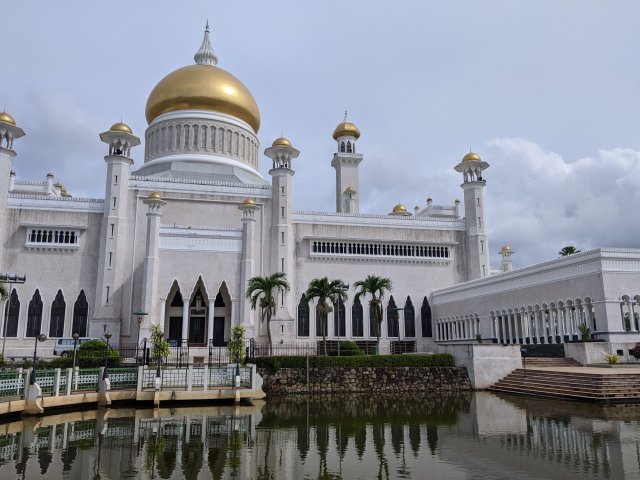
At 96% Muslim, Brunei is famous for its mosques.

The other thing to do in Brunei is the Regalia Museum, which is basically the king’s museum about himself (and allows absolutely no photographs). This guy has serious money, and he’s clearly not embarrassed about it. OTOH he steered his nation quite successfully through both decolonization and an extremely disruptive period of development, so I suppose he has good reason to be proud.

It’ll be interesting to see what happens when the oil runs out.

Sandakan and Sepilok

On the eastern coast of Malaysian Borneo lies the town of Sandakan. The town itself is not much to speak of, but it serves as the jumping off point for the Sepilok Forest Reserve, one of the last remaining areas of raw jungle in Malaysian Borneo. I booked two nights at the Sepilok Nature Lodge, right at the edge of the reserve.

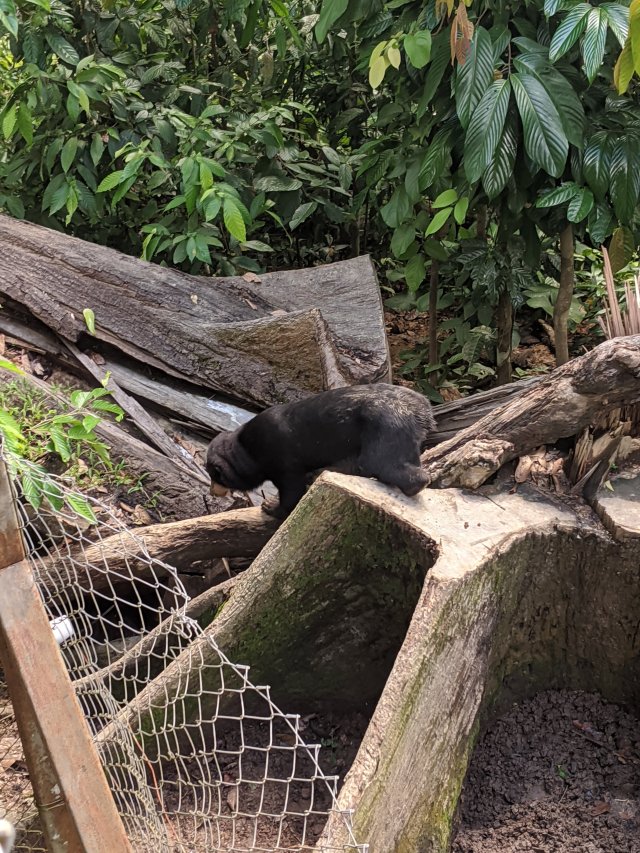
After arriving by plane from Kota Kinabalu and checking into the hostel, I spent my first afternoon at the two wildlife rehabilitation centers nearby. The first of the two was for sun bears. These small bears are great at climbing trees. While they can be found throughout Southeast Asia, the ones on Borneo represent an endangered subspecies. Much of their natural jungle habitat has been replaced by palm oil plantations, plus their bile is treasured as a component of traditional medicine. The bears at the Sepilok center have all been rescued from captivity, and the focus is on socializing them and teaching them the skills they need to survive in the wild. For the safety of everyone involved they are kept in a large enclosure until they’re ready for release. That means they were a little less wild than you’d expect, but it also means I could see them.

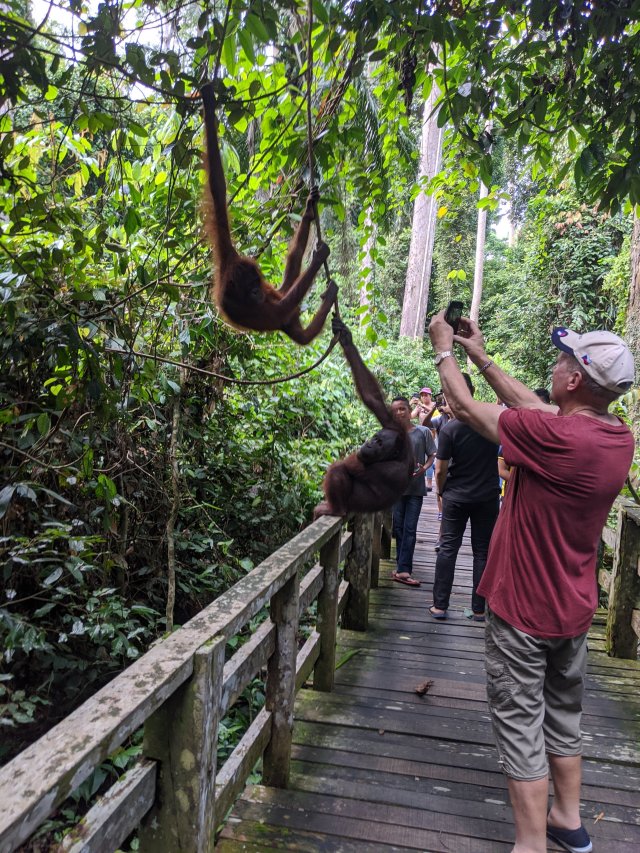
Next I visited the Orangutan Rehabilitation Center right next door. While some of the apes are actively recovering in a nursery, most are free to range throughout the forest reserve. However, the center feeds the animals daily to help keep the population stable (and to attract tourist revenue to help pay the bills), so they’re not as “wild” as they might normally be.

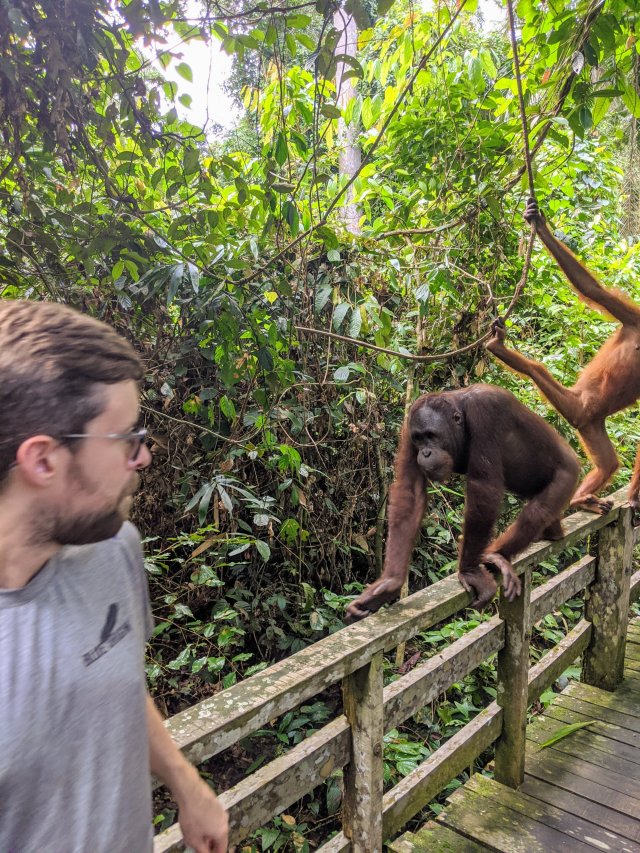
The orangutans were surprisingly comfortable around humans – these two were hanging out over the boardwalk, then dropped down right in the middle of us.

I was also surprised at how comfortable the humans were – I definitely felt the need to scramble to get out of the way.

Orangutans in the nursery. Not featured: a drawn out and extremely uncomfortable looking bit of orangutan sex (possibly rape?) that occurred right in front of the window.

That evening I walked down the road to the Rainforest Discovery Center for a night walk with the rangers. We spotted a good amount of wildlife, including giant red flying squirrels (we got to see one glide across the canopy), slow lorises, a python, and a whole bunch of big bugs.
My phone camera didn’t hold up too well in the dark, but I got a nice shot of the fading light.

On the second day I took a Grab (SE Asian Uber) into town, thinking I would take care of some errands. My driver Joyce and I struck up a conversation, and as we got to town she offered to take me around, serving as my personal driver for the day for just 60 ringgit. $12 for a worry-free day with a friendly and knowledgeable local? I’d be a fool to say no.
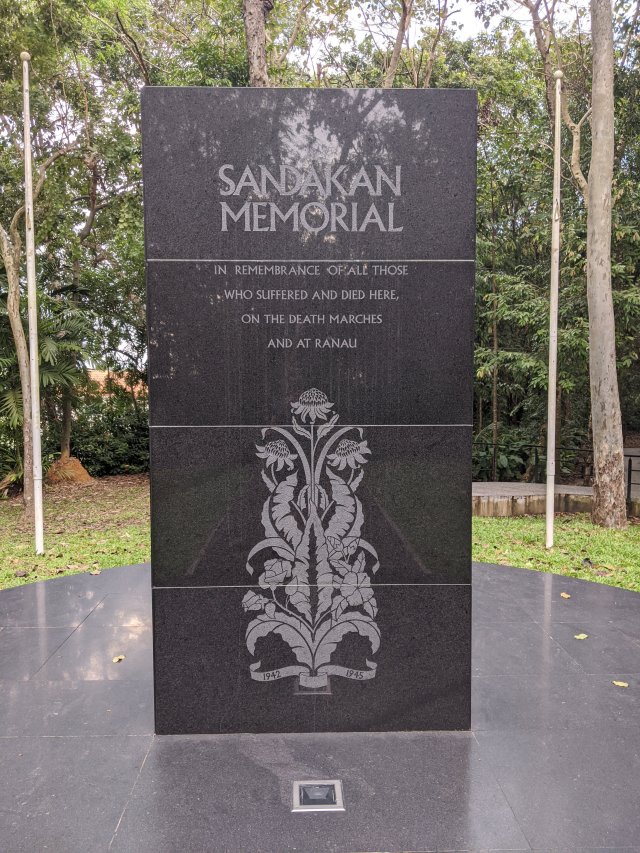
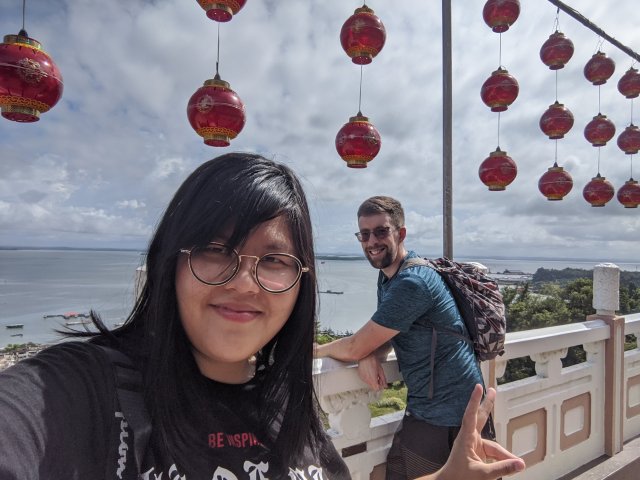
She ended up taking me all over town, including all sorts of spots I never would have thought to visit. From the best haircut experience of my life (head massage anyone?), to seafood soup at a floating village, to Buddhist temple at the top of the hill we ranged. She waited patiently as I suffered through a weirdly painful massage (I think I need to get better at feedback), commiserated over the human condition with me at the death march memorial, and then took me to a fantastic hole-in-the-wall Indian place for curry to take back to the hostel. Everything but the massage was perfect, and utterly effortless on my part.

I would not ever have gone down here by myself.
But I was rewarded with some tasty seafood soup (though I did pick out the oysters).
The local Buddhist temple commands an excellent view of town.
Joyce and me.
Sandakan hosted a Japanese POW camp full of Australians in WWII. They were treated brutally, worked and eventually marched to death. Of about 2500 prisoners, only 6 survived.

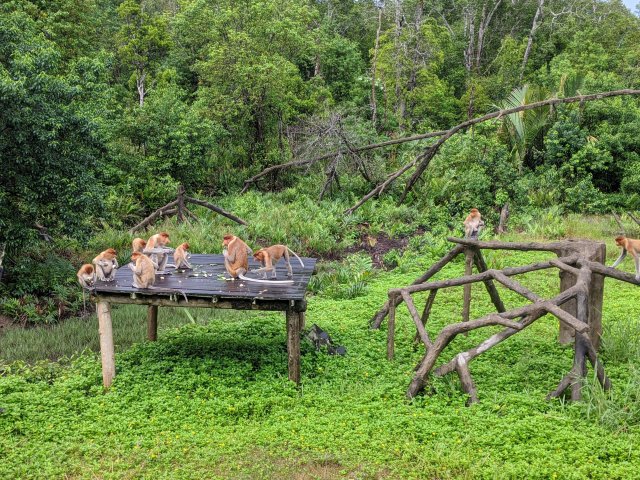
Joyce offered to take me around the third day as well, which I gratefully accepted. My destination was the Labuk Bay Proboscis Monkey Sanctuary, far from Sepilok and further from the airport. The proboscis monkeys live in mangrove forests, a habitat that has been decimated in recent years by – you guessed it – palm oil plantations. The only remaining ones in the region live in a small section left undeveloped by the palm oil company, and while they’re more wild than pets, the remaining swamp is too small to support the population, making them reliant on a twice daily feeding at an observation platform. Visitors can watch for a modest fee.

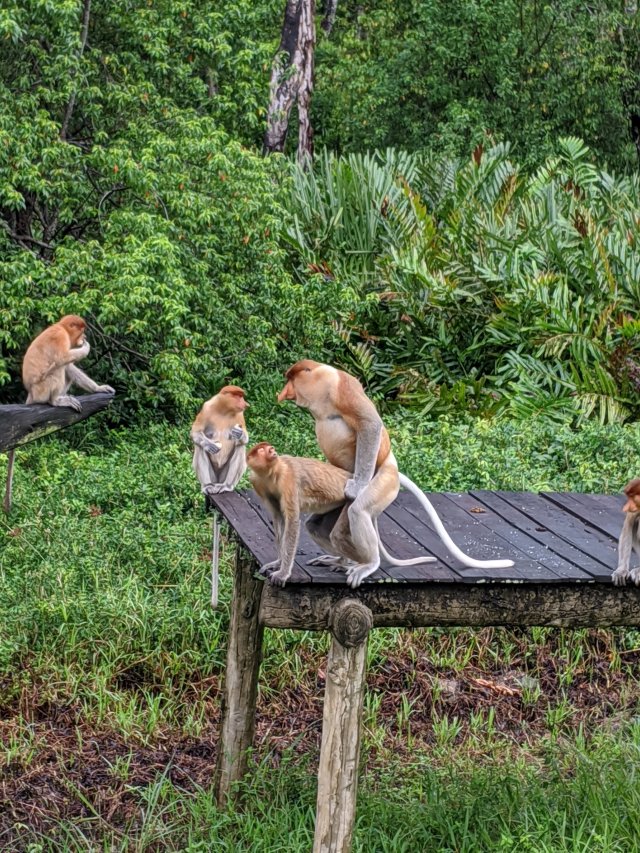
The one with the huge schnozz and throbbing erection is a male.
So many monkeys! I counted 31 scattered about.
The males were fairly aggressive, leaping up onto the platform and urinating on it to show dominance. They also loved to spring onto the metal roof and run back and forth, making as much noise as possible.
When the moment is right…

I don’t know how to feel about the state of conservation in Eastern Sabah. On the one hand it’s disappointing how dependent these animals are on humans – seeing proboscis monkeys on a feeding platform or sun bears in an enclosure is about as inauthentic as it gets, just one step up from a zoo. On the other, I’m glad that at least some effort is being made. Joyce said that more than 90% of the region’s former jungle has already been developed into palm oil plantations. While she was quite critical of Big Palm, and I suspect they deserve much of that ire, it’s also probably true that the resulting jobs, tax revenue and infrastructure development have made a big impact on local quality of life for humans over the past few decades. That in turn enables research and conservation efforts. It’s hard to say what a balanced sharing of the land might look like.

With these dour thoughts in mind we headed back to town.

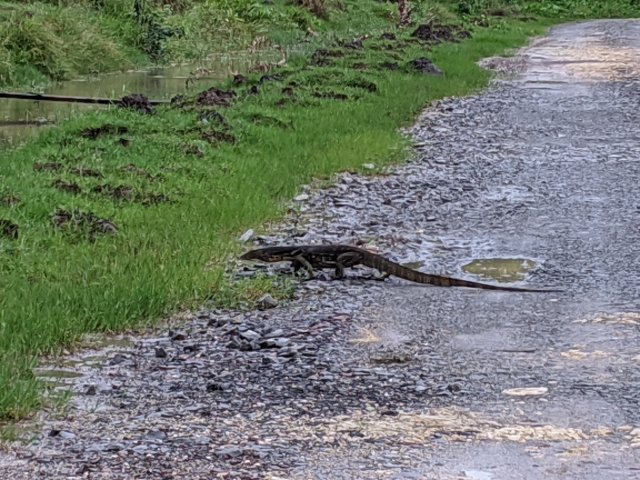
On the way back we spotted a monitor lizard crossing the road!
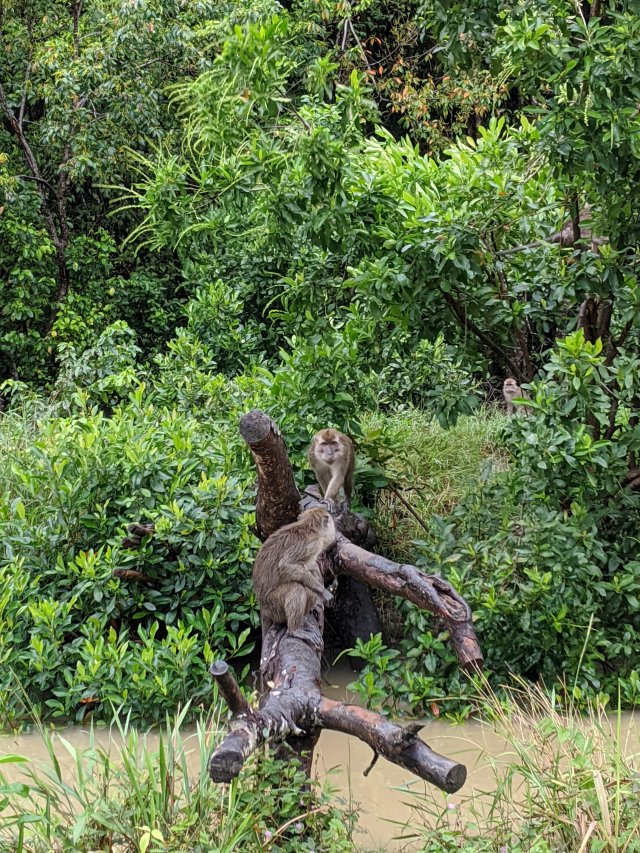
We also spotted a troupe of macaques! Wildlife galore!

One more amazing meal at a place I could never find again, then to the airport to catch my flight to Brunei. It was a whirlwind trip, and I think it would have been much less smooth (and fun) had I not met Joyce. So if you’re reading this Joyce – thanks!

Chicken mamy, kangkung belacan, dry battered shrimp and tom yum soup. Somehow we managed to finish all of it.