Liz and I have spent a couple of wonderful days exploring Cat Ba Island to the south of Hanoi. Cat Ba’s main attraction is its proximity to Lan Ha Bay, but the island is also home to a number of pleasant beaches, as well as a large national park.
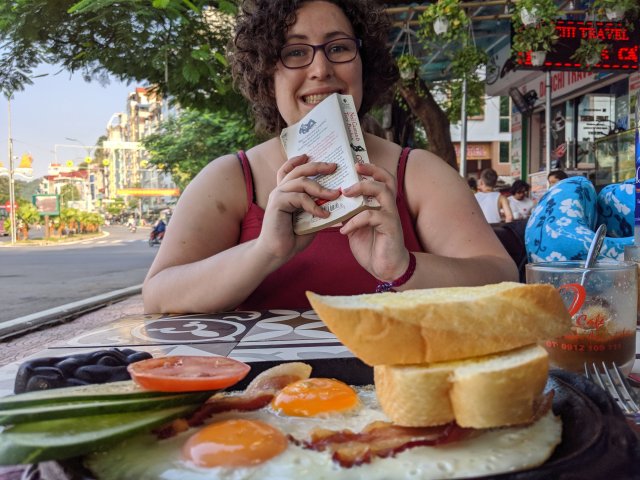
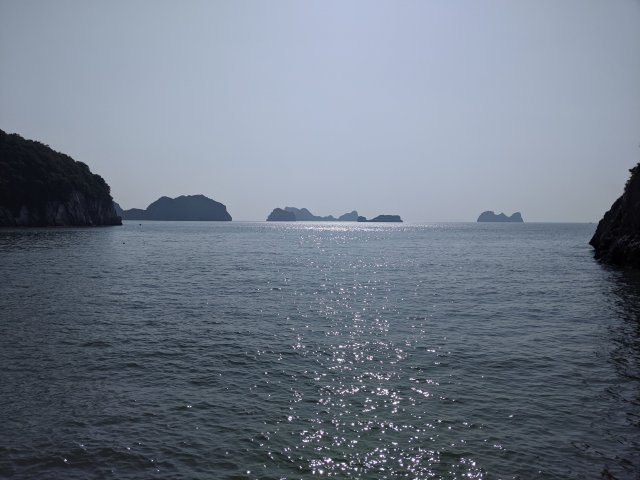

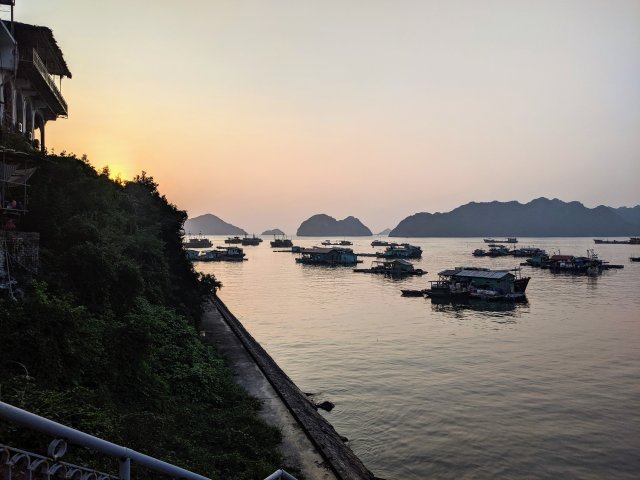
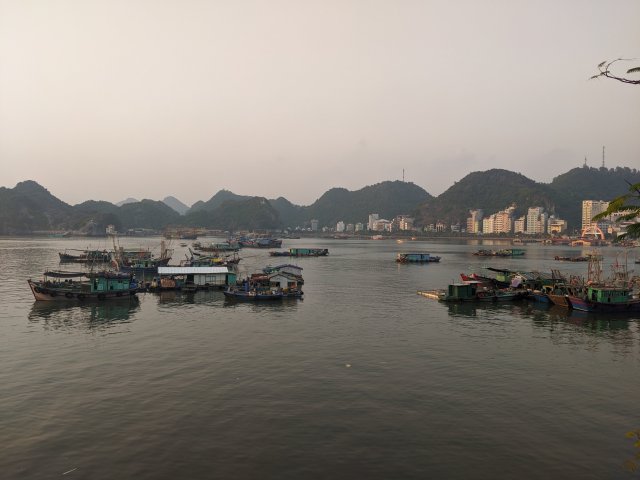


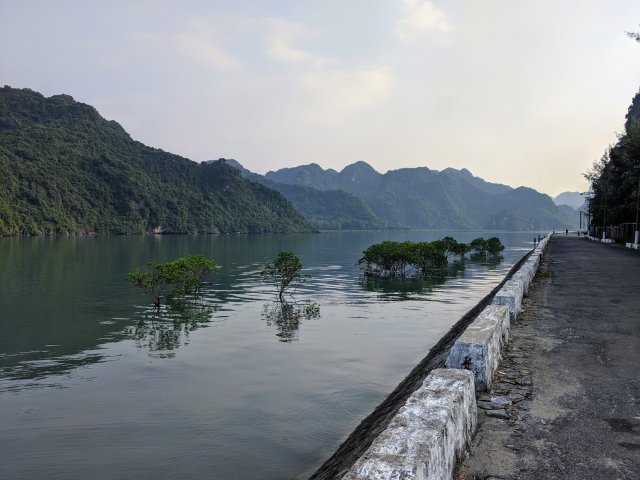

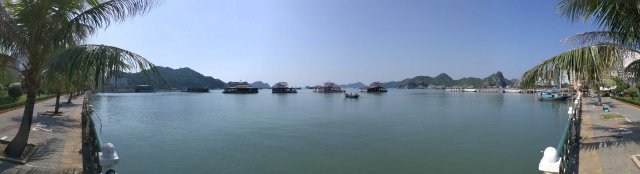

Liz and I have spent a couple of wonderful days exploring Cat Ba Island to the south of Hanoi. Cat Ba’s main attraction is its proximity to Lan Ha Bay, but the island is also home to a number of pleasant beaches, as well as a large national park.
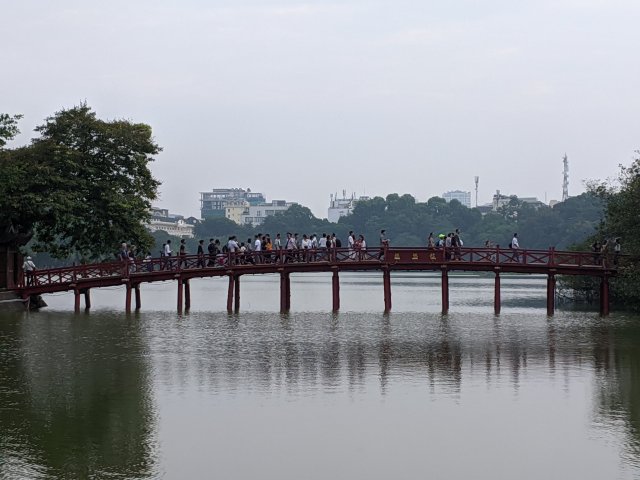
On November 1st my sister flew into Hanoi, and we spent the next few days exploring the city together. Hanoi, particularly the Old Quarter where we stayed, has a very different feel to Saigon. Instead of a network of tiny winding streets contained by a grid of huge boulevards, Hanoi’s streets are all medium sized, all slightly crooked, and all just as chaotic as anywhere in Vietnam.
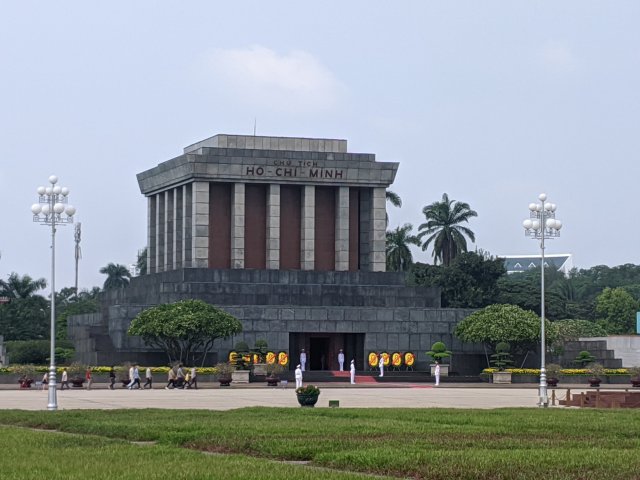
We did many touristy things in Hanoi. We went to Ho Chi Minh’s mausoleum and the temple of literature. We visited train street where cafes and shops spill out onto the northbound train tracks and twice a day they pick everything up and move it out of the way so the train can get through, which is officially closed but still kind of exists. We got lost in the streets of the Old Quarter, and took a truly excellent food tour.
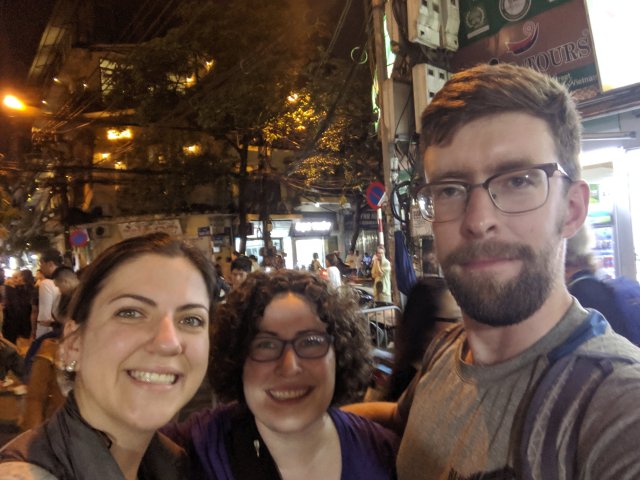
Then we caught the night train north to Sapa. The trains in Vietnam are interesting – the government run train contains normal coach seating, and luxury and sleeper cars run by private companies and booked independently are attached to the end of it. We booked through a company called Pumpkin Express – the cabin looked nothing like the luxury room promised on the website, but it was clean and private and we managed to get a few winks in.
Sapa was one of the places I was most excited about for this trip. It’s a stunning mountain valley in the far north of the country, close to the Chinese border, and it’s famous for its beautiful rice terraces. We had booked a two day trek through the area with Sapa Sisters, an employee-owned company known for hiring women of the local H’Mong ethnic minority as guides and paying them a good wage. Their mission is explicitly feminist, focused on empowerment and education. How could we not choose them?
We ate a quick breakfast, left our big bags at the office in Sapa town, and followed our guide down into the valley.
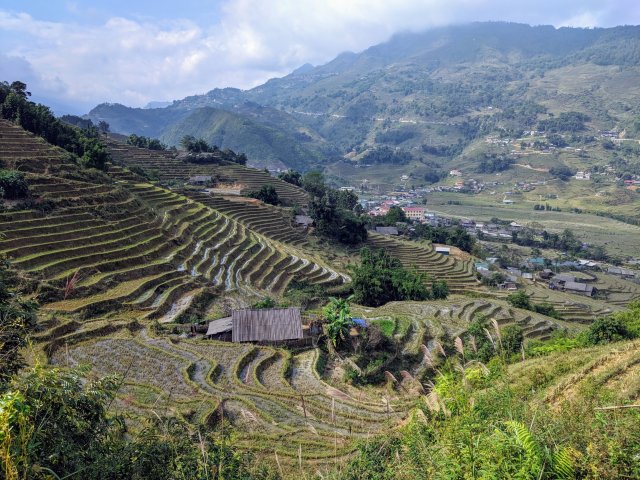
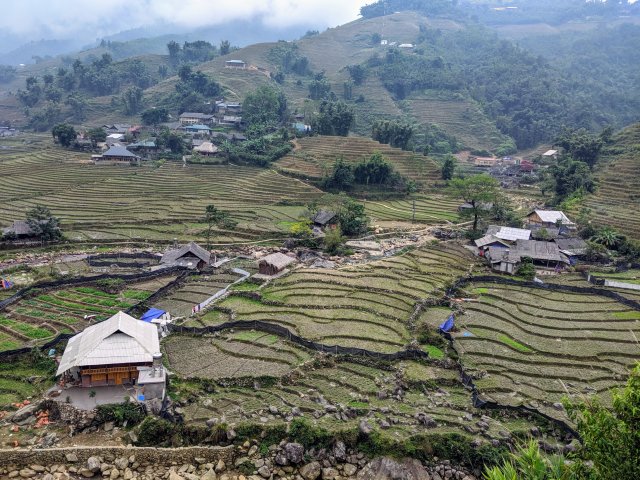
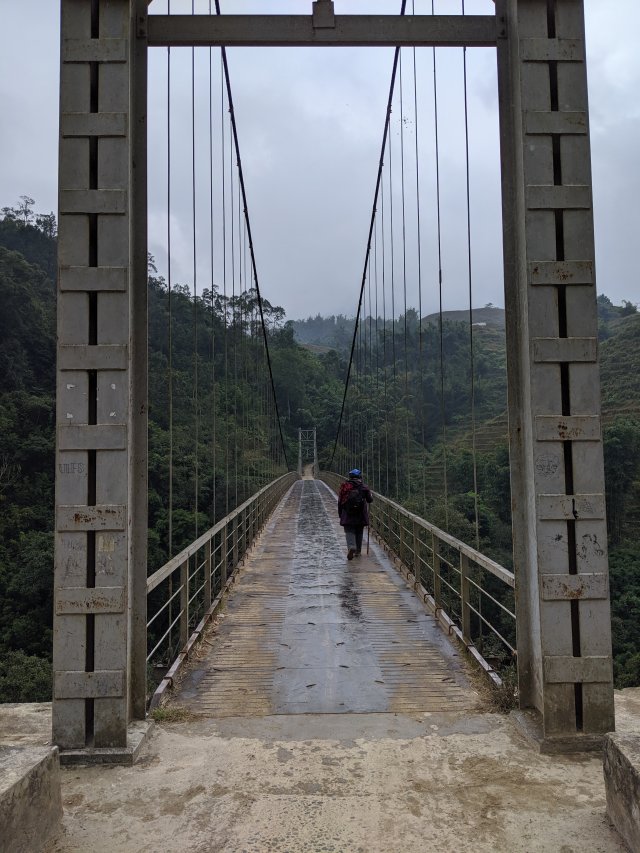
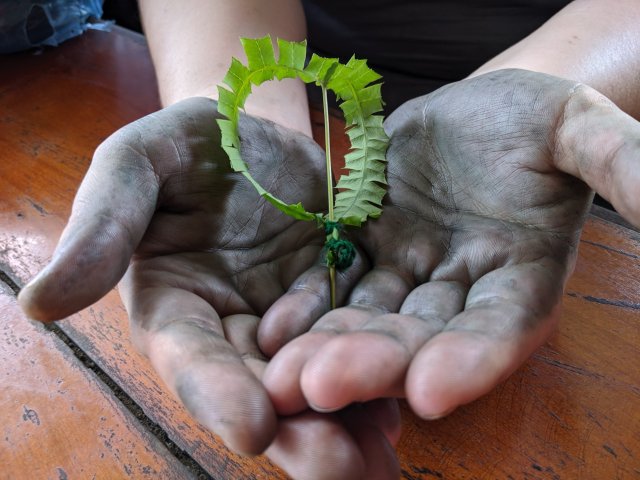
Our guide Sue was absolutely fantastic – she had a thousand stories about this place or that plant or the people living in this part of the valley. Surprise surprise, when you focus on empowerment and fair wages you attract and retain the best talent. The trek was just the two of us and Sue, so we got her wisdom all to ourselves.
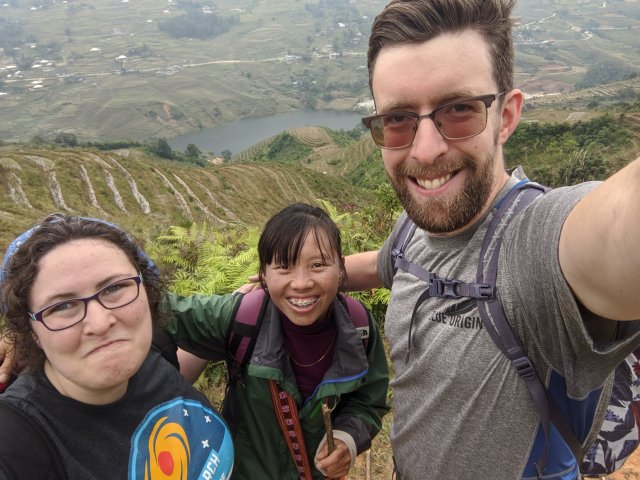
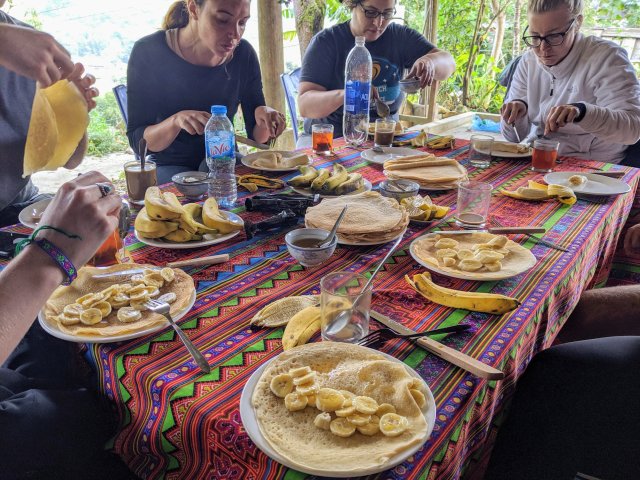
We spent the night at a homestay, along with 6 other trekkers going through the same company, all in groups of one or two. Our hosts cooked us up a feast, and the 8 of us sat and chatted and drank rice wine late into the night. I thought it was a little disappointing that our hosts didn’t join in on the fun and conversation, but I guess this is an everyday experience for them. They probably get tired of the language barrier, of the cultural difference, of answering the same six questions over and over. Still, the divide was interesting.
The second day was as beautiful as the first, though we kind of cheated – we trekked to the bottom of the valley, then took the bus back to the top.
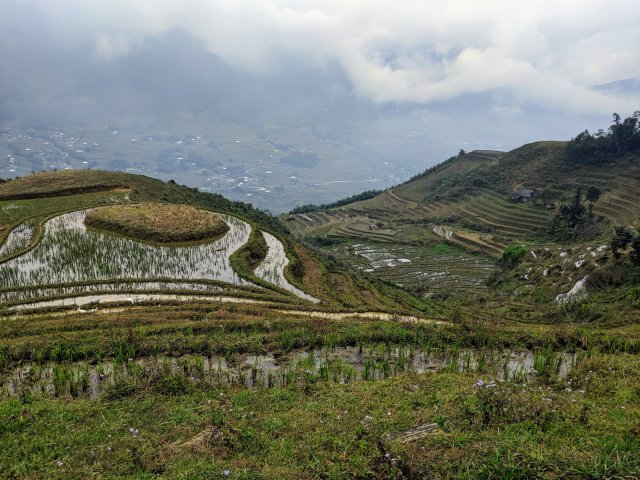
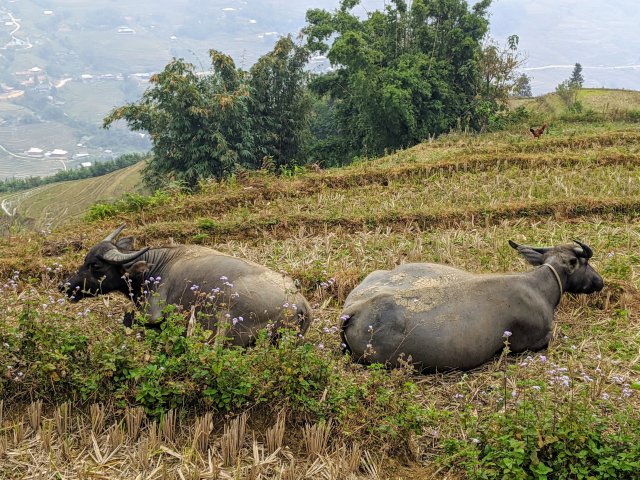
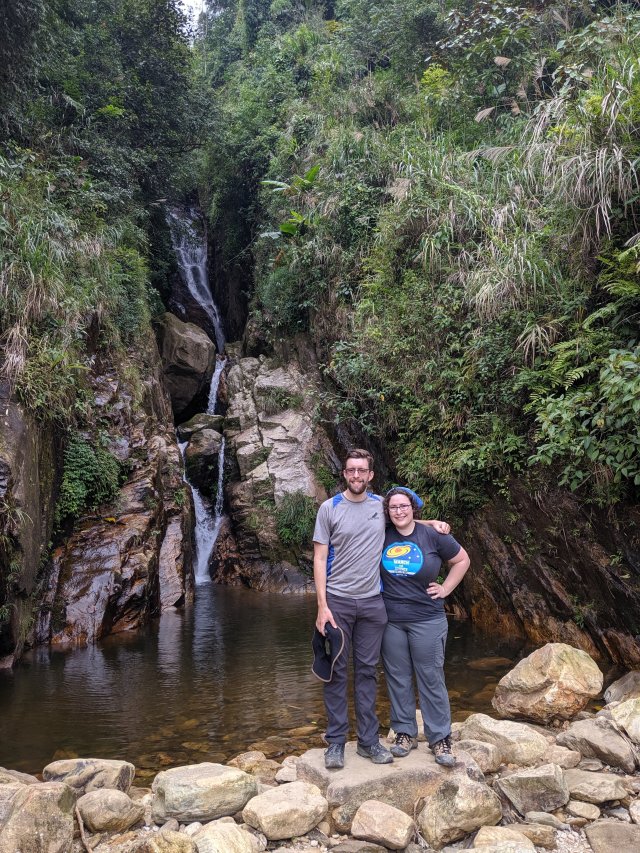
Two things struck me on this journey. The first was the amount of construction in the valley. The road was being improved, there were a bunch of new terraces under construction, and many new homestays and hostels were on their way up. There are new bridges and a new hydroelectric station at the bottom of the valley. Sapa town itself looks like nowhere less than Whistler Village, somewhat incongruous in the Vietnamese countryside. There is clearly a ton of money flowing into this area, and change is coming hot and fast.
The second was the obvious poverty of the region outside the tourist trade. Local women unaffiliated with the trek would cluster around the tourists at lunch, aggressively peddling textiles with traditional designs, desperate for a deal. We took a break from trekking to see a traditional dye-works, and it was stark – a two room shack with bare concrete floors, no insulation, little furniture and a single bare fluorescent bulb in each room. The only decoration were two framed photographs of important family moments, a graduation and a wedding. “Poverty porn” is the term Liz used for our being there, and I have to agree.
Sapa has unquestionably been changed by tourism, and has probably already lost some of what made it unique. On the other hand, it’s impossible to argue that the people here aren’t better off as a result – Sue is clearly doing well, and even the cloth peddlers looked comfortable and well fed. Over the past 20 years rice yields have tripled, infant mortality has plummeted, schools have been built and 4G has been introduced. Some of that is general Vietnamese prosperity, but I get the impression that tourism has played a big hand in lifting people out of poverty here.
All we can do, I suppose, is educate ourselves and consume responsibly, spending our endless dollars and euros with companies that respect and empower the local people and environment. We could probably stand to do a bit more of that at home too.
Ninh Bình Province lies 100 km south of Hanoi. It’s one of the gems of Vietnam, with magnificent limestone pillars rising abruptly from the landscape. I was there for one full day, and happened to get perfect weather. There’s not much of a story to tell here, just some great pictures.
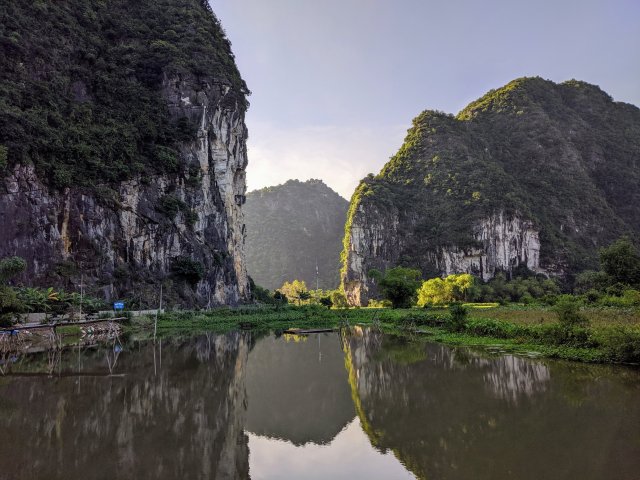

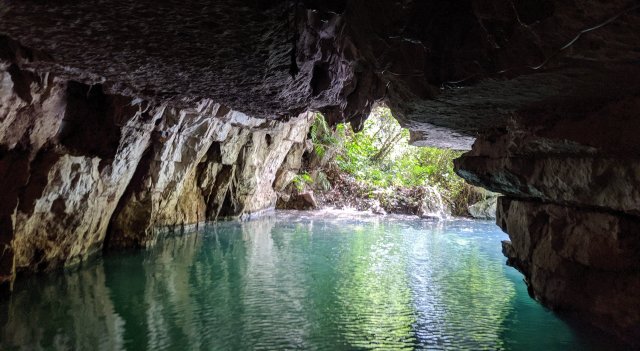
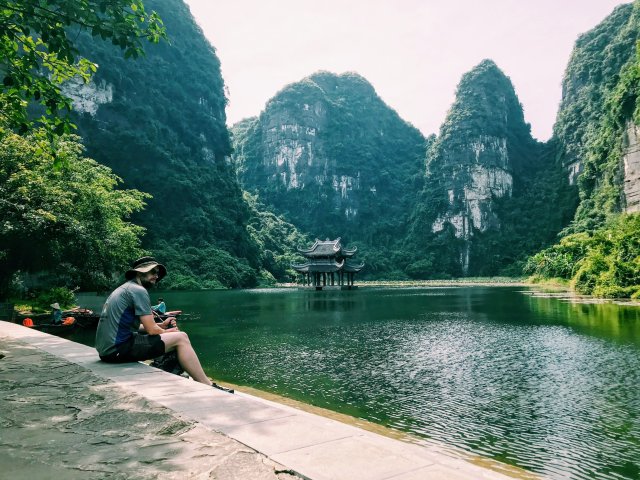
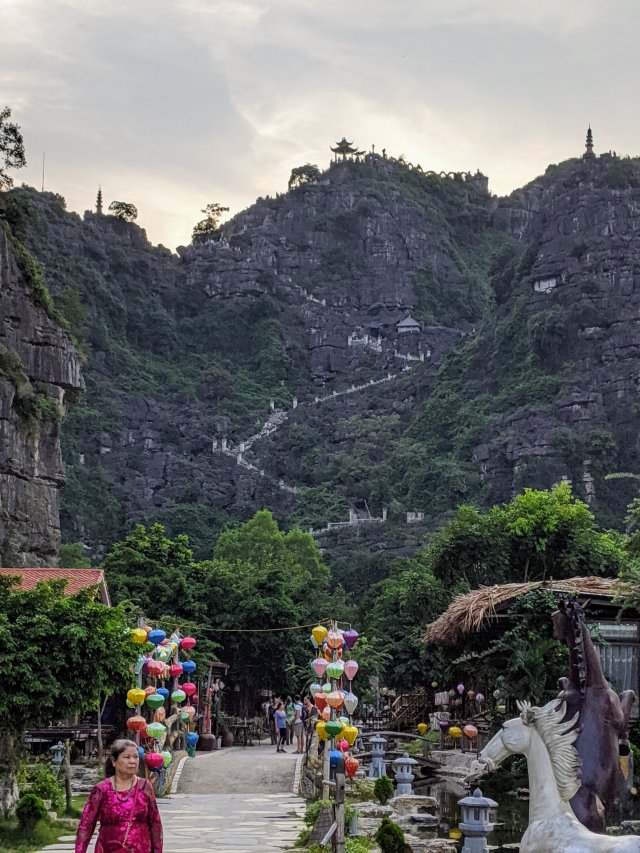
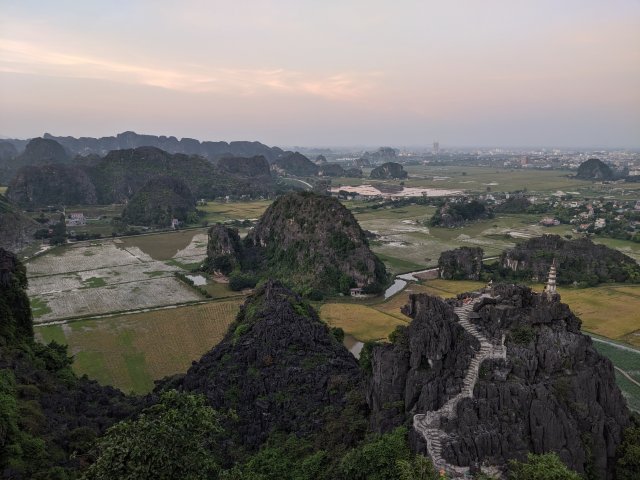
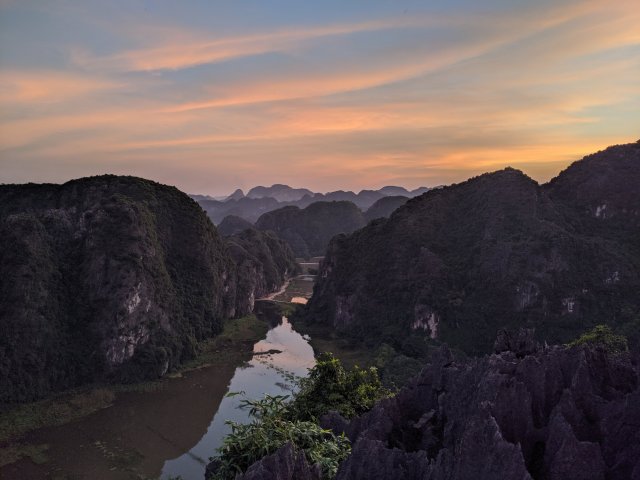
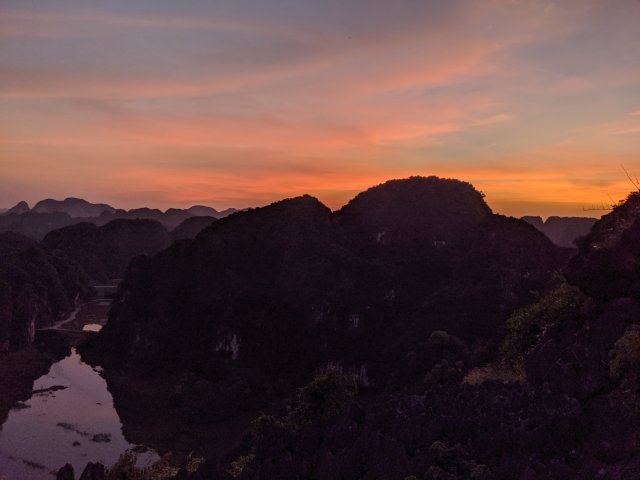
These photos were all October 30th. I considered staying another day in Ninh Bình, but the weather forced my hand. A tropical storm is currently hitting the middle of the country, and the forecast for November 1st was rain, rain and more rain. I really did not want to ride the final leg of my motorbike trip in a downpour, so it was a spooky Halloween ride to Hanoi for me.
The ride was pretty miserable – traffic was heavy, the scenery was the drab industrial outskirts of the city, and Google maps keep trying to direct me onto the cars-only expressway. Then I got into the city proper and spent a terrifying half hour winding through the insane, absurd traffic. Somehow I managed to make it to the rental agency without an accident. I said goodbye to Shelby, collected my deposit and walked to the hostel.
This hostel, the Old Quarter View, is one of the nicest I’ve stayed at. It’s clean and quiet, has a good social vibe, and has the nicest bathrooms I’ve seen the whole trip. And of course, they also had a Halloween party.
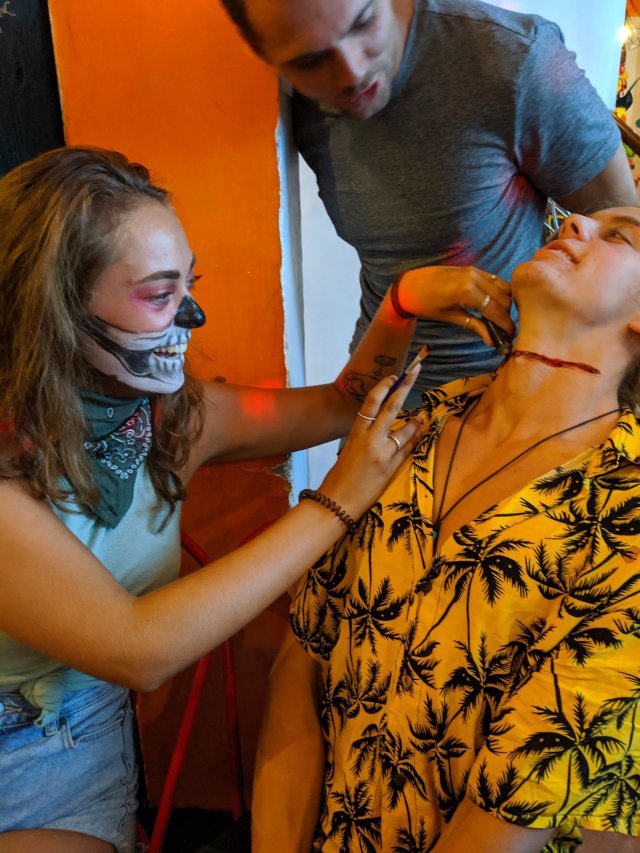
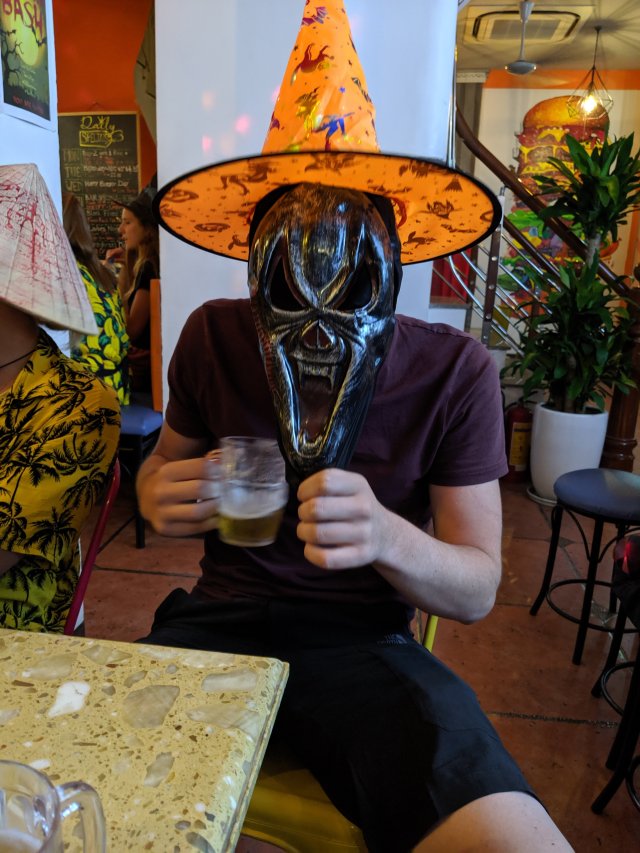
I ended up hanging out with a couple of Danes, who convinced me to go meet up with a group of their friends at a club. The friends were only in Vietnam for a short trip, this was their last night, and they had a birthday in the group, so they were doing some serious partying – private booth, bottle service, the works. So I just… pretended to be Danish for the evening.

Fortunately for me, a typical Vietnamese breakfast of fresh fruit and a big bowl of noodle soup is a great way to address a hangover.
My next real stop after Hue was Phong Nha.
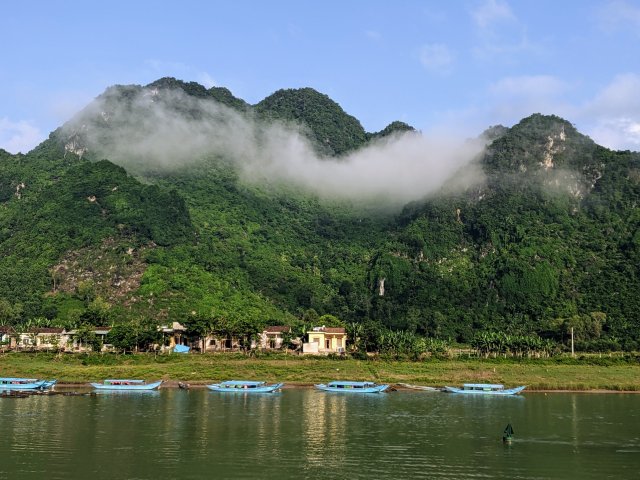
I spent two nights there, taking in the scenery and exploring the caves that make the region famous. Phong Nha is home to the largest cave in the world, but experiencing it requires a 5 day trek and will set you back about $3000. I opted for a slightly smaller experience for a much more modest price.
Our tour of Ruc Mon cave started with a trek through the jungle, including several deep river crossings. Fording a waste-deep river would be miserable in the Csacades, but here it’s so warm that it’s welcome, and you dry off almost as soon as you’re out.

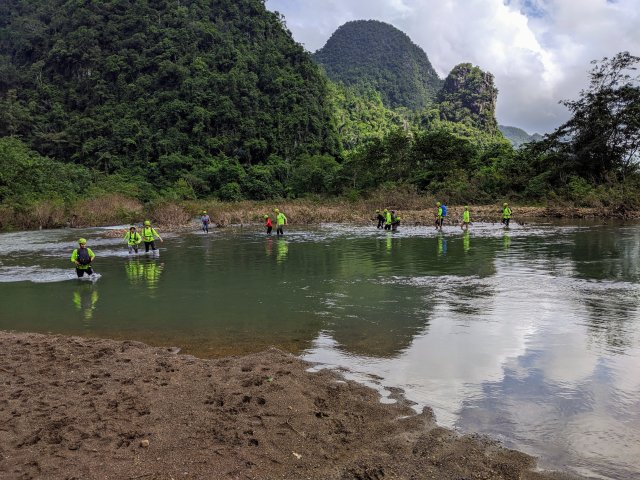

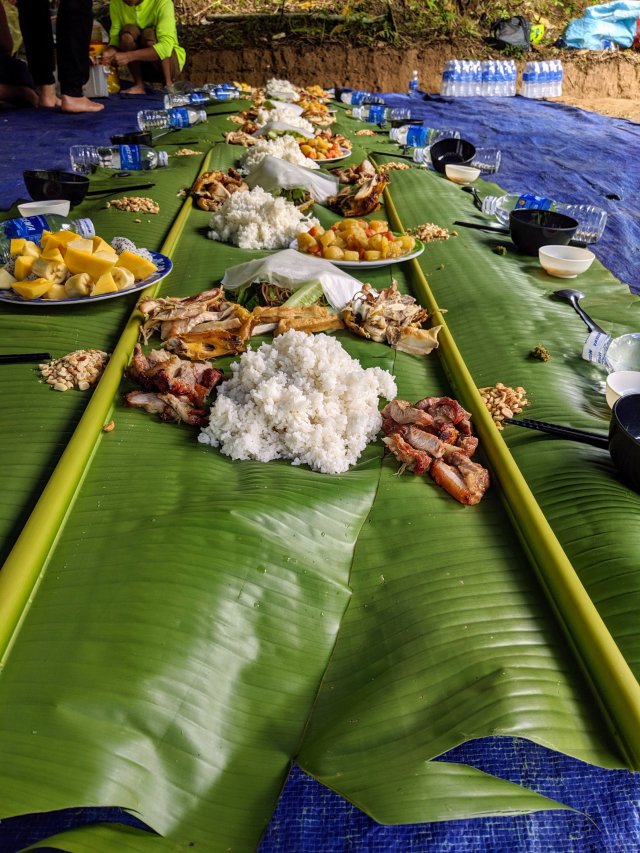
I don’t have pictures of the cave itself, because they encouraged us to leave all our gear at camp. Suffice it to say it was very impressive. The biggest chamber of Ruc Mon is 45 meters deep, which works out to a serious drop.
We started in an upper chamber, and made our way through chutes and ladders down to the water level. Then we swam upstream, navigating the underground river deep into the mountain. We came to a big rock, jumped off it, and let the current carry us downstream, out of the cave mouth, past our lunch camp and all the way back to the vans. What a way to travel!
Back to the hostel I joined in an incredible homemade family dinner, a daily ritual prepared by the family that runs it. My advice: don’t bother telling your hosts that you’re too stuffed to eat another bite, or that you’ve had plenty of rice wine – they won’t listen.
Over dinner I made friends with a Brit named Jack who was on a long weekend from his job teaching English in Hanoi. We decided to wake up early the next day and visit the Phong Nha Botanic Garden.
Unfortunately we ran into trouble along the way. Shelby got a flat tire! We limped back into town, stopped at the first mechanic we saw, and 20 minutes and about $4 later we were back on the road.
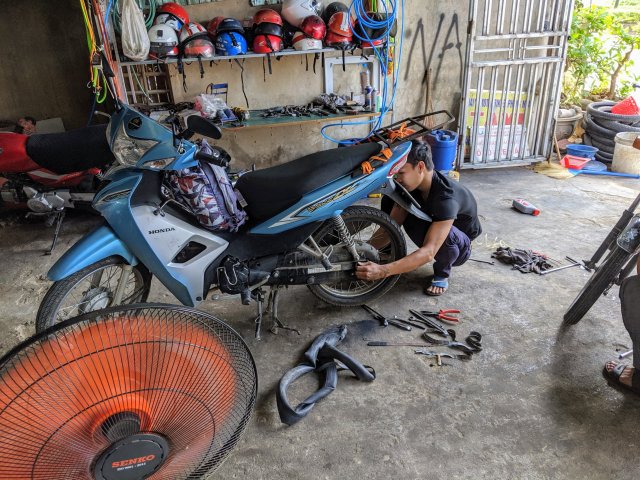
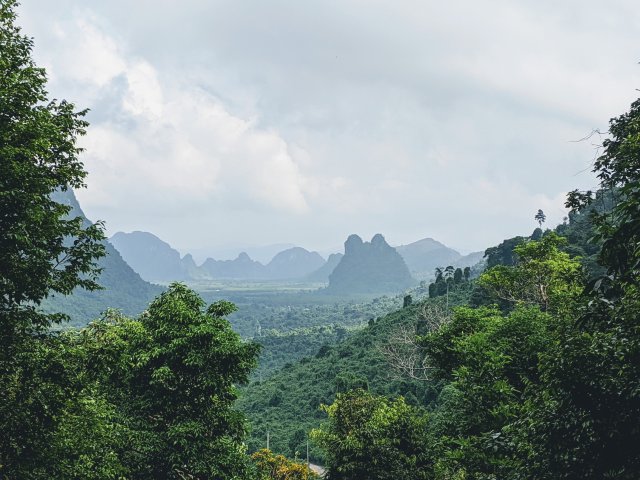
We discovered that “garden” is a bit of a misnomer – in my mind that word implies something carefully, intentionally tended, but this was more of a nature trail through the jungle. Even better!
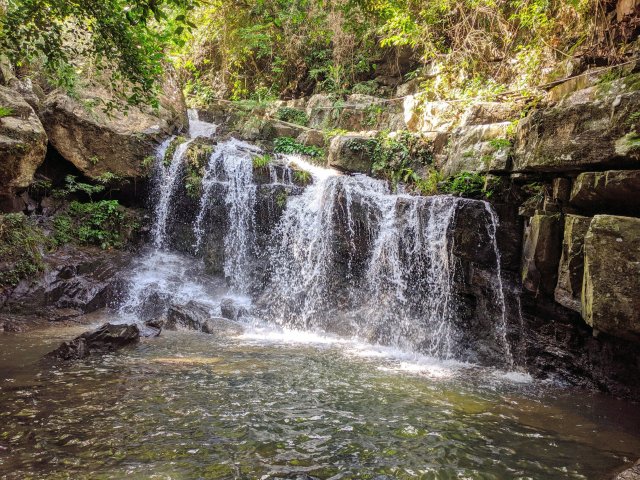
Back to the hostel to drop off Jack and grab my bag, and I was on the road.
I think I was wrong before – the road I followed between Khe Sanh and Phong Nha was not the Ho Chi Minh Road, it was just some beautiful back route. This stretch of road was much more developed. Proper tarmac with graded and banked turns replaced prefabed concrete slabs, and Shelby and I made great time, rolling into Vinh just as the sun was setting.

Vinh is another town with very little going on, so I ate a bahn mi for dinner, watched a movie (Baby Driver) and went to bed early.
The next day I rode to Ninh Binh Province. Vinh is not on the HCMR, so the first hour or so was along QL1A, the national highway running north-south, which I have mostly managed to avoid thus far. It was miserable. Traffic was heavy, and just as insane as anywhere else in Vietnam. Finally I turned off onto a side route, which eventually led me back to the HCMR.
Even then it wasn’t quite peaceful – we’re definitely getting close to Hanoi now, and I rarely found the totally empty roads of further south. A common occurrence: coming around a blind corner, I’m forced onto the shoulder by a bus passing a semi truck. The bus is laying on the horn – this seems to be the default state of busses here – so I have some warning, but it’s still terrifying. Around the next bend I’m forced to slow down to weave my way through a herd of goats. How did the semi and the bus make it through this? I’m not sure.
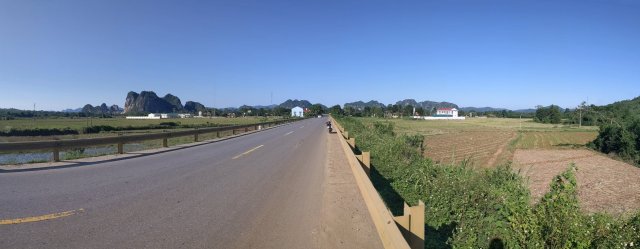
I took my time on the road, stopping for coffee and lunch, and arrived in Ninh Bình right around sunset. And what a sunset it was.

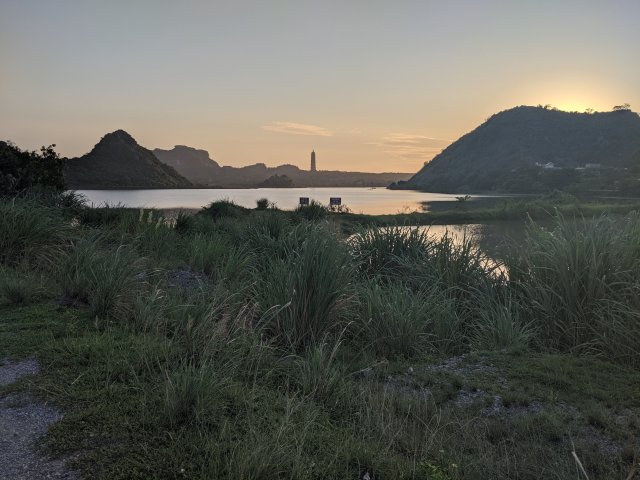
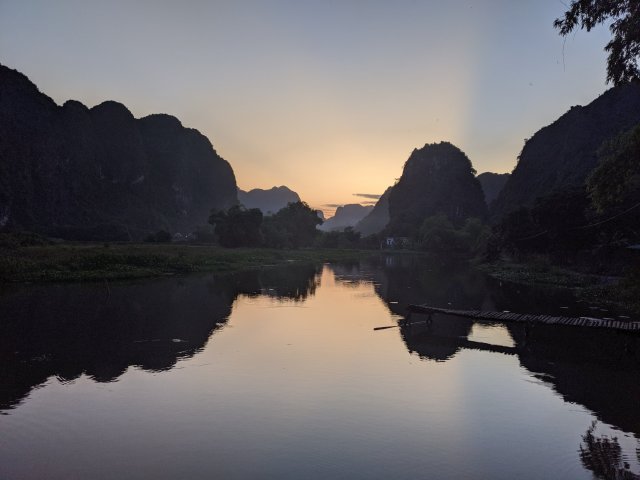
After two long days on the road, I am quite sore. I’m definitely glad I scheduled days off into this ride.

Ninh Binh is beautiful and peaceful, and will deserve a post of its own. Today is October 30th, and I have just one more day of driving before I arrive in Hanoi. I meet my sister on the first of November. The question is, do I drive up tomorrow and hope to find a bangin Halloween party, or do I hang out here another day and arrive on the first. It might depend on the weather, it might depend on how I feel when I wake up tomorrow morning.
I love this traveling life.
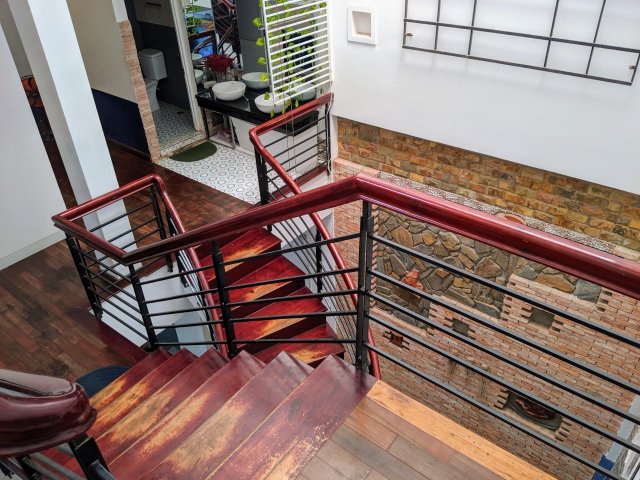
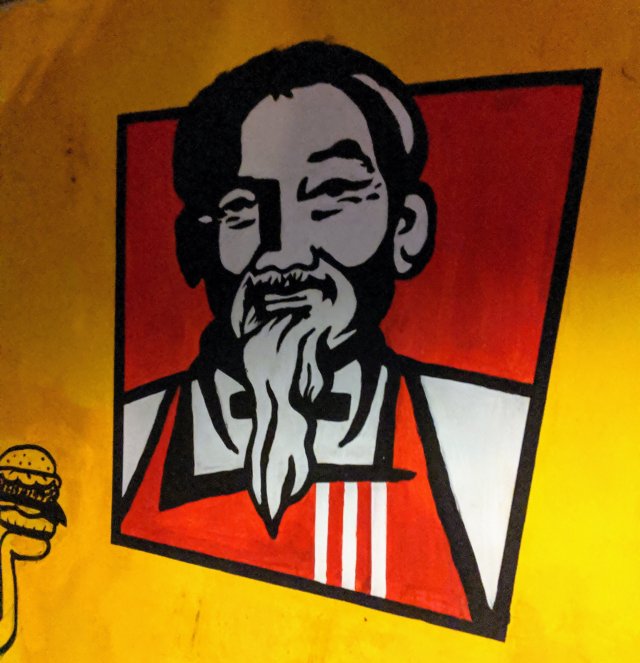
I’m going to backtrack a bit, because I realize I never posted pictures of Hoi An and Hue. I don’t have a strong narrative here, it’s just me going tourist stuff, so I’ll let the pictures drive.
My first stop was Hoi An. I had only 2 nights booked here at first, but I liked it so much that I extended my stay to 4.
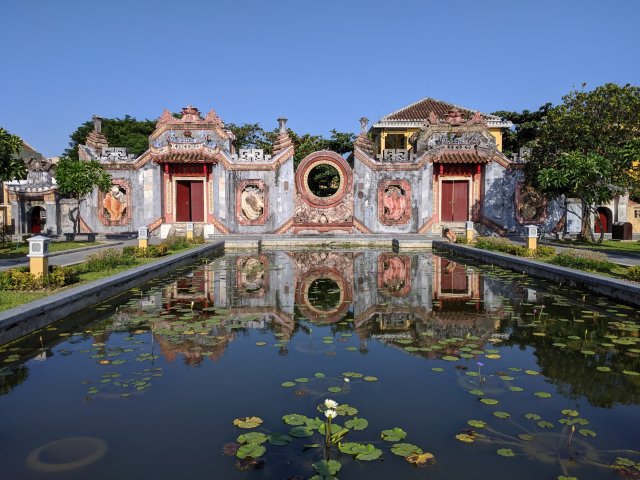
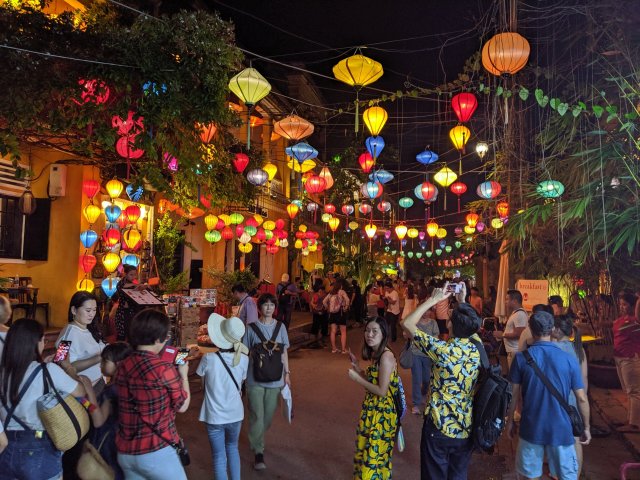
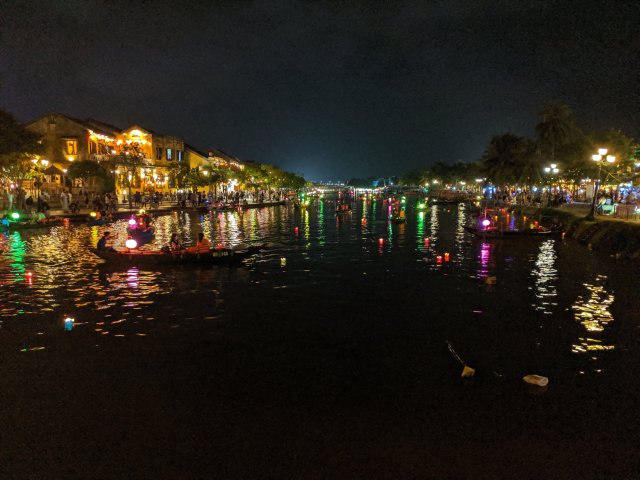
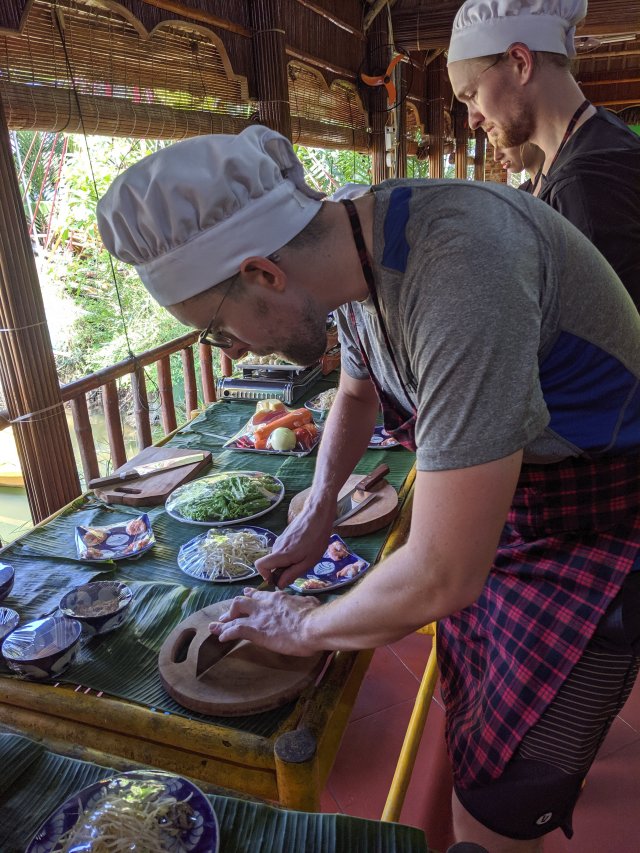
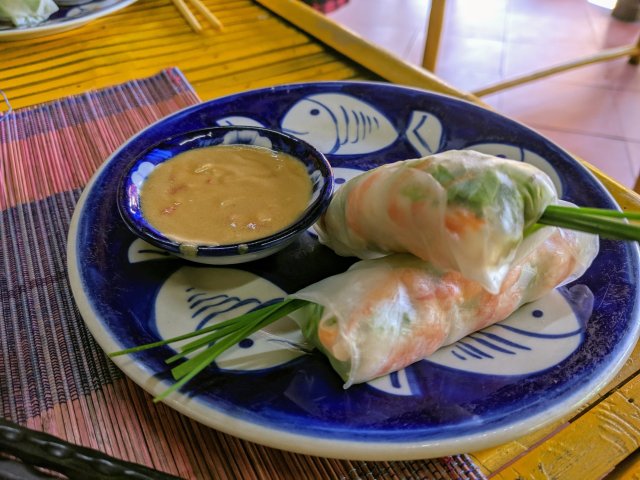


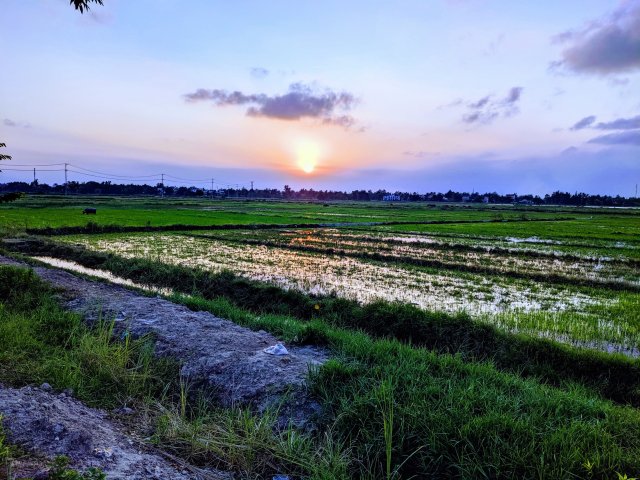

Hoi An is also known as the city of tailors. I got two suits made here, but forgot to get pictures – you’ll just have to trust that they look fantastic. They weren’t cheap, but they were much cheaper than they would be back home ($250 each for cashmere wool and custom tailoring).
My next stop was Hue, a laid back city with a couple of streets where the party can be found. I was only here for two nights, and wasn’t paying attention to my phone, so I don’t have many photos.


 Dan Roberts